The Emigrant's Handbook
Part 13: Safety, Emergencies and Disaster Preparedness
Safety abroad is neither a gut feeling nor an advertising slogan. Some places feel safer than Germany because rules are enforced more strictly, private security services are visible, or certain districts are well controlled. Other places feel freer but come with regional risks, crime, corruption, natural hazards, or weaker infrastructure.
Both can be true at the same time.
Therefore, do not confuse “I feel freer” with “fewer rules apply here”. Many countries are considerably less lenient than Germany when it comes to residence, work, drugs, insults, traffic, demonstrations, photography, religion, alcohol, or online comments. Anyone leaving Germany because of bureaucracy or control should not, of all things, underestimate the local rules in the destination country.
A good safety plan is sober and practical. Which regions should you avoid? Which times of day, means of transport, or routines are risky? Which emergency numbers genuinely work? Who will help you locally? Where is the nearest good hospital? How quickly can you get access to cash, a passport copy, insurance, and transport?
Safety does not arise from fear. Safety arises from not having to start googling only when an emergency occurs.
In the Philippines, I have experienced more than beautiful sunsets. I have experienced typhoons, power cuts, water outages, earth tremors, and, after Odette, an entire month without electricity in Cebu City. On a checklist, something like that can quickly look harmless. In reality, what suddenly matters is whether your phone is charged, whether you have water in the house, whether you can still get cash, whether your medication will last, and whether you even know which road is still passable.
If you take only one point from this chapter, make it this one:
Emergencies are not a specialist subject for anxious people. They are part of an adult emigration plan.
13.1 Medical Emergency Plan
A medical emergency is one of those situations in which wishful thinking can become really expensive. In Germany, you are accustomed to a particular system: emergency number, health insurance card, hospital, billing. Abroad, things can work very differently.
Sometimes you have to pay first. Sometimes not every hospital is equally well equipped. Sometimes an ambulance is not the fastest solution. And sometimes, in very practical terms, your credit card determines whether you are admitted immediately or first have to argue about it.
You should therefore know exactly which local hospital is suitable for genuine emergencies. Not simply “some hospital”, but very specifically:
Where is the emergency department?
How far away is it?
How will you get there at night?
Which hospital has the better equipment?
Who speaks English?
Which insurance policies do they accept?
And who can accompany you if you can no longer think clearly yourself?
The combination of insurance and a means of payment is particularly important. Good international health insurance is of little use if, in an emergency, you have no insurance number, no emergency telephone number, no credit card, and no one who can make calls on your behalf.
Therefore, do not store this information only somewhere in the cloud that you may be able to access solely with a phone you have lost. Print the most important pages. Also leave copies with someone you trust.
Your emergency file should contain at least the following: a passport copy, visa status, insurance policy, the insurer’s emergency number, blood group if known, allergies, medication, diagnoses, contact persons, local address, means of payment, and a short summary in English.
If you have a chronic illness, it should also include a doctor’s letter.
I would rather make this point too bluntly once: in an emergency, you do not want to have to explain what some German abbreviation on your medication plan means. Make it simple enough for someone who does not know you to help as well.
Concrete next step: Create an emergency card and a medical emergency file. Then, within your first 30 days locally, check at least one hospital, one pharmacy, one transport route, and one person who can be reached in an emergency.
Ideal time: During your first 30 days locally.
For health-insurance links, see Part 5.
13.2 Typhoons, Earthquakes, Power Outages, and Supplies
The Philippines is a country affected by natural events. Typhoons, heavy rain, flooding, earthquakes, power cuts, and water outages are part of the actual risk situation. That does not mean you have to be afraid all the time. It simply means you should not pretend that infrastructure is as predictable everywhere as it is in Germany.
Typhoon Odette was the moment when theory became real practice for me. Sitting in Cebu City without electricity for a month is entirely different from ticking “buy a power bank” off a checklist. Suddenly, the issues are light, water, food, communication, work, refrigeration, the neighbourhood, and the simple question of whether you even know in the morning what is happening outside.
If the internet, ride-hailing services, or card payments then fail as well, you very quickly realise whether you were genuinely prepared or merely optimistic.
Earthquakes involve another factor: you often receive no long advance warning. It is then not a matter of going out to do some last-minute shopping. It is a matter of whether your home appears safe, whether heavy objects are securely positioned, whether you know the escape routes, and whether your family knows where to meet after an event.
With typhoons, you usually have more lead time. But only if you take warnings seriously and do not wait until everyone else also wants to buy water, petrol, and batteries.
A basic emergency kit should include drinking water, non-perishable food, a torch, a head torch, a power bank, medication, cash, copies of documents, basic first aid, a radio or a reliable source of information, and a simple place to sleep.
If you work online, backup internet, an alternative power supply, and a realistic work-interruption plan should also be included. A power station sounds boring until you are sitting in a hot room and can at least still run a fan or charge your router or phone.
Check the home itself as well. Is there a generator? Is there water pressure, a tank, or a well? How high is the risk of flooding? Is the home near a slope, river, coast, or older building stock? How will you get out if the lift, garage, or road does not function?
These are not luxury questions. They are rental decisions.
If you take only one point from this section, make it this one:
Disaster preparedness is not a large bunker. Disaster preparedness is the ability to get through seven to fourteen difficult days without immediately becoming helpless.
Save three separate contact points for this purpose: PAGASA for weather, heavy rain, and typhoon warnings; PHIVOLCS for earthquakes and volcanoes; and the Office of Civil Defense for disaster preparedness and coordinated situation updates. These links belong together in your emergency file because no single one covers every risk, and you should not have to search for the responsible organisation during an emergency.
Concrete next step: Create a personal supplies and outage list for 72 hours, 7 days, and 14 days. Record water, food, medication, light, electricity, internet, cash, documents, transport, pets, family, and the question of where you will go if your home is unusable.
Ideal time: After moving into your first longer-term home.
13.3 Digital and Financial Security
Emigrants are often more digitally dependent than people back home. Banking, insurance, cloud services, communication, bookings, access to government services, and documents all operate online. Phishing, device loss, and weak passwords are therefore genuine risks.
If your phone is gone, it is not only your phone that is gone. Your bank access, 2FA, email, taxi app, hotel booking, boarding pass, and the copy of your passport may be gone as well.
At a minimum, you should have a password manager, device encryption, cloud backup, backup codes, and clearly defined emergency access. A second device, a spare SIM, an alternative email access route, and a separate emergency card can also be useful.
Separate your everyday money from your reserve money. Separate your passport from your passport copy. Separate your main device from your backup codes. If everything is in one place, you do not have a Plan B, only a neat folder.
There is another factor with money: rules change. Banks can review accounts, cards can be blocked, cryptocurrency exchanges can be blocked in a country, transfer services can request evidence, and a German bank account can sometimes become nervous if everything suddenly comes from Asia.
That is no reason to panic. But it is a good reason to have at least two reputable payment routes, a cash reserve, and proper evidence.
Do not base digital security solely on convenience. SMS-based 2FA using a German number that does not work reliably abroad is not a professional plan. A single email address for everything is weak as well. And a password notebook in your suitcase is only as good as the place where that suitcase happens to be.
Concrete next step: Carry out a digital emergency test: If your main phone were lost, could you still access your email, bank, insurance, cloud storage, flight booking, hotel, password manager, and passport copy? If not, build alternative routes now.
Ideal time: Set it up before departure and check it annually.
Chapter 13 Checklist: Emergency, Supplies, and Outage Plan
Tick an item only after you can support it with a figure, date, document, or tested decision. The full one-page worksheet is in the appendix.
- What fails first when power, water, networks, or transport stop?
- Do I know the hospital, risky areas and times, night transport, local rules, and emergency contacts?
- Will water, food, and medicines last 72 hours, 7 days, and 14 days?
- Do light, backup power, communication, and my digital emergency access work without my main phone?
- Are cash, document copies, escape routes, and a meeting point prepared?
- Has everyone involved discussed and practised the plan?
Practical check
Checklist at the end
Use the short checklist after reading all sections.
Go to checklist →Who is online?
- Visitors on the website
- Loading …
- Registered members
- Loading …
- Online now
Das Siegel konnte gerade nicht geladen werden. ProvenExpert-Profil öffnen
Calendar
Dates at a glance
Calendar month is loading.
Dates are loading.
Dates today
Next 7 days

Auswandern auf Probe? Henning über Freiheit, Kosten und Leben in Asien (1)
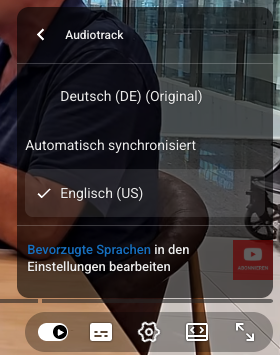
Watch in English
In the YouTube player, open Settings, choose Audio track, then English (US).
 No more ad blocks with a Supporter subscription!