The Emigrant's Handbook
Part 3: Authorities, Tax, Pension and Deregistration
Notice: This is not legal or tax advice; if in doubt, ask a qualified professional or the relevant authority. Information, deadlines, and administrative practice may change.
3.1 Deregistering Your Residence and German Registration Formalities
(Revised: 18 June 2026)
Deregistering your residence sounds boring at first. And yes, honestly, it is. But this is exactly where well-prepared emigrants often save themselves a great deal of stress later. Anyone who works imprecisely here or postpones the subject for too long quickly creates consequential problems with banks, health insurance, the broadcasting fee, post, tax status, and contract cancellations.
The correct sequence is especially important. Deregistration is closely linked in time to when you actually move out. You should therefore neither do it months in advance on suspicion nor delay it until you are already abroad and have to improvise.
Plan this step deliberately into your final weeks in Germany. Clarify beforehand which office is responsible, which documents are needed, and how you will receive the deregistration certificate.
The core is simple: if you move out of your German home and do not move into a new home in Germany, you must actively deregister. During an ordinary move within Germany, deregistration at the old place is handled through registration at the new one. But when moving abroad or giving up your German home, it does not happen automatically.
Under the Federal Registration Act, deregistration must be completed within two weeks after moving out. It is possible no earlier than one week before moving out. Whether this can be done in person, in writing, or online depends on your responsible registration authority.
Many people consider remaining registered in Germany because subjects such as statutory health insurance, banking, post, or the ability to return depend on it. That thought is understandable. But this is exactly where a grey area can quickly begin.
I will not give you instructions for a sham residence. If the actual centre of your life is abroad, you must examine registration, tax, and insurance questions properly and openly.
A correspondence address, postal service, or family address is not automatically a residence. If you do not actually live there, you should not misuse that address as your registered address. False registration details, late deregistration, or providing a residential address only on paper can cause trouble under administrative law.
That is not an increase in freedom. It is a future predetermined breaking point.
Another important point: the frequently cited 183-day logic is not a universal free pass. It is often discussed in a tax context, but does not replace examination of residence, habitual abode, health insurance, employment, pension, and the actual centre of your life.
For statutory health insurance, the decisive question is which insurance status genuinely exists: employee, pensioner, voluntary member, family insurance, Bürgergeld, EU/EEA/Switzerland case, S1, or permanent residence in a third country.
Clarify this with your health insurer, the DVKA, or a qualified adviser before relying on “nobody will notice.”
At the same time, you should not make deregistration larger than it is. It does not take away your German citizenship. Nor does it simply erase pension rights you have already earned.
But it is a strong administrative signal and an important piece of evidence for many subsequent questions: where do you really live? Which insurance applies? Which bank address is correct? Who receives your post? What happens to your vehicle, broadcasting fee, contracts, tax, and social benefits?
If you receive unemployment benefit, Bürgergeld, or other benefits, matters become serious especially quickly. Bürgergeld is tied to requirements such as capacity for work, need for assistance, and habitual residence in Germany.
Unemployment benefit abroad is not a free emigration subsidy, but applies only in narrow circumstances and mostly in a European context. Clarify such questions in writing with the Federal Employment Agency or Jobcenter before departure instead of later hoping for goodwill from abroad.
The deregistration certificate is not a piece of paper for some drawer. In practice, it is often precisely the evidence you later need for cancellations, queries, or subsequent procedures. If you lose it or never organise it properly, you will have to initiate many things again from abroad.
And that is exactly what you want to avoid.
If you visit the office in person, ask directly for the deregistration confirmation. Also ask whether an address or place-of-residence entry on your identity card or passport should be adjusted. It is not a drama, but it is the kind of small matter that becomes considerably more laborious from abroad than at the counter.
Concrete next step: Before moving out, create a small deregistration file containing the appointment schedule, responsible authority, document list, and a fixed place for the original and scanned deregistration certificate. Add a second page asking what deregistration or remaining registered would mean for each of these subjects: health insurance, long-term care insurance, tax status, bank, ID/passport, post, vehicle, broadcasting fee, and current contracts.
Ideal time: Shortly before moving out according to the applicable deadlines; prepare one to three months beforehand.
Sources and Guidance
Federal Registration Act, Section 17 — Registration and Deregistration
Federal Registration Act, Section 54 — Administrative Fines
Social Code II, Section 7 — Eligible Persons
Social Code I, Section 30 — Residence and Habitual Abode
3.2 Cancelling Contracts and Ending Running Costs
(Revised: 18 June 2026)
When emigrating, many people lose money not through the major decision itself, but through twenty small legacy commitments that simply continue. Tenancy agreement, electricity, gas, water, internet, mobile phone, insurance, club fees, streaming, gym, software subscriptions, storage space, or direct debits—all of these can continue taking money from your pocket month after month if you do not examine them systematically and in time.
The simplest method is not complicated, but is highly effective: go through your bank statements from the last 24 months. Everything that was debited goes onto a list. Not only the large amounts. Small annual fees, app subscriptions, insurance, domains, clubs, or old services in particular like to continue because you have long forgotten them in everyday life.
But do not then simply cancel things on impulse. A proper contract list containing deadlines, contacts, evidence, and status is better. What has already been confirmed? What is still running? Where do you need the deregistration certificate? What is deliberately intended to continue? And what merely needs to be changed to a different address or payment method?
For this subject, organisation beats activism.
For telephone, internet, mobile services, gyms, insurance, or local services, moving abroad may be a special case. But do not rely on hearsay or statements from some forum. Check the conditions of each contract, ask in writing, and attach the deregistration certificate only when it is genuinely required.
Also obtain confirmation of the termination date and final payment. “I have left” is not a proper cancellation strategy.
Especially important: do not blindly cancel every insurance policy. Some policies may remain useful during the transition, for storage, liability, or the ability to return. The mistake is therefore not only cancelling too late. Sometimes it is cancelling too quickly.
Concrete next step: Download your bank statements from the last two years and mark every recurring debit. Use them to create a contract list with columns for provider, amount, frequency, cancellation period, special cancellation yes/no, required evidence, target status, and confirmation date.
Ideal time: Contract list three months beforehand; cancellations according to their deadlines; final evidence during the last weeks.
3.3 Tax Office, Tax Status, and Double Taxation
Simply because you leave Germany, the tax office does not automatically disappear from your life. This is one of the points many people take too lightly when emigrating.
Pensions, rental income, investment income, holdings, real estate, a home that remains available, or other domestic income may remain relevant for tax purposes. And this applies even if, internally, you have long felt that you are “out.”
What you must consider: your tax status is not determined by gut feeling, but by concrete features such as residence, habitual abode, and the type of income. Depending on the case, double-taxation treaties, special rules for pensions, assets, or holdings, and the question of whether particular applications or notifications are required are added.
At this point at the latest, half-knowledge can become expensive.
I therefore say this clearly: do not use forum rumours as the basis for your decision here. If you have only employment income and a simple account, the subject is usually more manageable. But as soon as pensions, rental income, brokerage accounts, a company, holdings, or real estate are added, it quickly becomes complex.
Complex does not automatically mean bad. It merely means you must examine it properly.
Many countries advertise easy company formation, low taxes, digital-nomad programmes, or special rules for new residents. That can be interesting. But it can also become dangerous if you read only the advertising line: “zero percent tax” or “company in 48 hours.”
The decisive question is not whether a programme sounds good. It is whether it fits your residence, actual management, customers, banking routes, substance, reporting obligations, and departure from Germany.
A foreign company does not automatically resolve German tax questions. If you are in fact still relevant for German tax purposes, your management is located there, or you overlook exit-tax or foreign-tax issues, the attractive structure may later become expensive.
Therefore, always examine company formation, residence, habitual abode, tax residence, and business operations as one overall package.
The goal is not to develop tax anxiety. The goal is to know before departure which subjects are still open, which documents you need, who is responsible, and where you will purchase professional advice before a mistake becomes expensive.
Concrete next step: Collect all types of income and asset positions in one overview and have them classified for tax purposes before moving away instead of frantically discovering individual issues only after departure. If you are planning a foreign company, digital-nomad status, or special tax programme, create a separate review page: country, legal form, tax residence, management, substance, bank account, reporting obligations, German connection, and exit scenario.
Ideal time: 6 to 12 months before departure for more complex cases; no later than three months beforehand for simple cases.
3.4 Pension, Proof of Life, and Health Insurance in Old Age
(Revised: 18 June 2026)
If you emigrate while receiving a pension or are close to retirement, you must not take this subject lightly. Your pension must not merely arrive somehow. It must fit into a resilient overall structure.
This includes payment, bank details, health insurance, long-term care, necessary evidence, and what the whole arrangement feels like at an older age—not only during the first euphoric year after emigrating.
Deregistering from Germany does not destroy rights you have already earned under statutory pension insurance. If you already receive a pension, payment abroad may be possible. If you are not yet retired, voluntary contributions or later applications may matter depending on your situation.
The decisive issue is therefore not the pub question “registered or deregistered,” but whether insurance periods, address, bank details, tax status, and evidence are properly arranged.
Many people look only at the monthly figure arriving in their account. That is not enough. The combination of pension, health insurance, and ability to return is decisive.
A supposedly inexpensive solution may later become very costly if pre-existing conditions are added, inpatient treatment becomes necessary, or you suddenly realise that you must regain the ability to act in Germany or Europe during a care or crisis situation.
Ordinary administration is also important. Depending on the country and procedure, anyone permanently living abroad must expect an annual proof-of-life certificate or check whether a different method of evidence applies instead.
You should also report changes of address or bank details to the Pension Service early so that payments do not stall.
A special warning for emigrants worldwide: Many personal online services of the German Pension Insurance now use secure digital identification. Do not wait until you are already abroad to plan access to the DRV customer portal.
Before departure, activate the online ID function, known as the eID. Install the AusweisApp and practically test logging in with your identity card. According to the official download page, the AusweisApp supports Android, iOS, macOS, and Windows, among other systems.
Important: a German passport does not replace the online ID for this purpose. The AusweisApp reads the identity card, electronic residence permit, or eID card. Therefore, test the PIN, NFC function, smartphone or computer, and ID chip in practice, not merely in theory.
You must continue monitoring this subject after departure too. Identity cards and passports expire. An identity card with a defective chip, a forgotten PIN, or a non-functioning device can suddenly cost weeks from abroad.
It is then no longer merely about convenience, but potentially a pension notice, insurance record, voluntary contributions, tax certificate, or deadlines.
Therefore, plan renewal, PIN letter, embassy or consulate appointment, delivery routes, and a trusted person in Germany so that a pension problem is not the moment when you discover your digital access is dead.
Sources and Guidance
German Pension Insurance Online Services
German Pension Insurance — Pension and Living Abroad
Pension Service proof-of-life certificate
From my perspective, this subject does not belong in the category “I will sort it out later.” If you are a pensioner, it is a core part of your emigration. If you are not yet a pensioner but will enter this phase in the coming years, you must nevertheless consider the later structure now.
I emigrated at age 49, long before the statutory pension. That makes the gap especially visible: what happens between emigration, reserves, the first occupational pension, the later statutory pension, and rising healthcare costs?
That question is not pleasant. But it determines whether you still sleep calmly at 60 or 65. Pension is not a chapter for “later.” Pension begins during emigration planning.
Concrete next step: Six months before moving, examine pension payment, DRV online access with the AusweisApp, bank details, proof of life, health insurance, and return scenario as one connected package instead of six individual subjects.
Ideal time: Six months before departure, then review annually.
3.5 Elections, Crisis Preparedness, and Embassy
Being a German abroad does not mean that everything automatically continues as before. You must deliberately organise elections, passport renewal, embassy appointments, notarial matters, and crisis preparedness.
If you deal with them only after a typhoon, medical emergency, or document problem has already occurred, matters become unnecessarily frantic.
Proper crisis preparedness is one of the simplest and, at the same time, most sensible measures. It includes contact details for the German foreign mission, local emergency numbers, copies of important documents, and a functioning personal emergency file.
For Germans abroad, registration in the ELEFAND crisis-preparedness list is also useful so that the Federal Foreign Office can reach you more effectively during a crisis.
Nor should you postpone voting rights and later consular matters indefinitely. Not all of it is complicated. But almost everything becomes easier if you prepare it calmly once.
That is exactly what makes the difference between a calm and a frantic overseas scenario.
You must be realistic about voting from abroad. If you are no longer registered in Germany, you are not automatically entered in the electoral register. You must apply for entry in good time before every election.
The documents arrive by post or, depending on the country, through the official courier channel. This takes time. Forwarding or express post may also leave you with costs.
The postal ballot must reach Germany in time. If postal routes take three months or are unreliable, you must examine very early whether secure participation is practically possible at all.
Concrete next step: Enter the embassy, honorary consulate, local emergency numbers, and ELEFAND in your emergency file and check at least once whether all links, numbers, and document copies are genuinely current. For elections, also create a dedicated checklist: application for the electoral register, responsible municipality, postal transit time, embassy courier route, costs, return deadline, and Plan B if the post is delayed.
Ideal time: Prepare before departure; update after arrival.
For the Philippines, save the German Embassy Manila and, if you live in the Visayas, also the Honorary Consulate in Cebu. Both links belong here because you should know the responsibilities, contact details, opening hours, and available services before an emergency. The honorary consulate cannot perform every task of the embassy, so check which office actually handles your case before travelling there.
Sources and Guidance
Federal Returning Officer — Germans Abroad
Federal Foreign Office ELEFAND
Chapter 3 Checklist: Deregistration, Contracts, and Tax/Pension File
Tick an item only after you can support it with a figure, date, document, or tested decision. The full one-page worksheet is in the appendix.
- What consequences does deregistration trigger for insurance, banks, and contracts?
- Where will I be tax-resident and required to provide evidence after leaving?
- Are pension payments, life certificates, and overseas transfers prepared?
- Are all notice periods and confirmations documented?
- Are the embassy, consulate, ELEFAND, and voting route clarified?
- Are originals, scans, responsibilities, and dates kept in one file?
Practical check
Checklist at the end
Use the short checklist after reading all sections.
Go to checklist →Who is online?
- Visitors on the website
- Loading …
- Registered members
- Loading …
- Online now
Calendar
Dates at a glance
Calendar month is loading.
Dates are loading.
Dates today
Next 7 days

Auswandern auf Probe? Henning über Freiheit, Kosten und Leben in Asien (1)
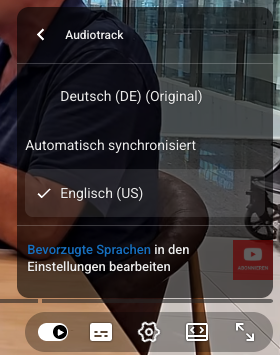
Watch in English
In the YouTube player, open Settings, choose Audio track, then English (US).
 No more ad blocks with a Supporter subscription!