The Emigrant's Handbook
Part 4: Documents, Digital Security and Mail
Documents are not sexy. Nobody emigrates because they are eager for apostilles, powers of attorney, scans, and password managers. But this supposedly boring stuff often determines later whether a problem remains a brief administrative procedure or turns into months of theatre.
I have seen it often enough: the country itself is not the greatest problem. The problem is the passport that is about to expire. The SMS TAN that suddenly stops arriving. The letter from the tax office that has been lying on your mother's kitchen table for three months. Or the power of attorney that was “somehow planned” but never signed.
If you take only one point from this part, make it this:
The better prepared your documents, post, and digital access are, the less vulnerable you are abroad to chance, distance, and paperwork.
4.1 Passport, Certificates, Apostilles, and Translations
At home, a passport often lies like a boring little booklet in a drawer until you genuinely need it. Abroad, it suddenly stops being a booklet and becomes the key to almost everything.
You use it to extend your visa, open a bank account, check into a hotel, take another flight, marry, visit an authority, or identify yourself at the embassy during an emergency. If that passport has expired or is not valid for long enough, you do not have a small administrative problem. You are standing in front of a door that remains closed for the time being.
Many countries require a passport to remain valid for a sufficient period upon entry or application, often at least six months. Airlines may be additionally strict because they ultimately face the trouble if they transport someone with incorrect or insufficient documents.
And because a German passport is not simply extended but issued anew, this subject belongs well before departure. Anyone who looks in the drawer only on the final Thursday before the flight is playing administrative roulette.
But the passport is only the beginning. As soon as a journey becomes a real move, the other papers appear: international birth certificate, marriage certificate, divorce decree, death certificate, driving licence, pension documents, proof of insurance, educational or professional qualifications, vaccination records, medical reports and, depending on your life situation, documents concerning children, pets, or real estate.
At a desk, this sounds dry. In practice, it is precisely the difference between “I will submit that tomorrow” and “I now have to obtain it again from abroad.”
It becomes even more uncomfortable when a residence, employment, school, or tax programme requires additional evidence. This can quickly involve a police clearance certificate, proof of income, bank statements, tax assessments, pension notices, employment contracts, business evidence, a CV, passport photographs, language certificates, proof of address, or health certificates.
Some of these documents may be only a few weeks or months old when you apply. Others must be in a particular language or carry a particular certification. That is exactly the moment when an orderly document folder suddenly becomes worth more than the most beautiful suitcase.
For international procedures, an ordinary German copy is often insufficient. Sometimes you need a certified copy, sometimes a certified translation, and sometimes an apostille or legalisation.
The difference initially sounds like administrative jargon, but matters in practice. Apostilles and legalisation primarily confirm that a public document was genuinely issued. Whether you need one does not depend in a general way only on the country, but above all on the specific purpose. A visa, marriage, bank, school, pension, driving licence, inheritance, insurance, or authority may each have different requirements.
Therefore, sort your papers not by feeling but by use. What do you need for which purpose? Which originals must travel with you? Where is a scan sufficient? What requires a certified copy? And what must under no circumstances go into a shipping box?
Originals belong in hand luggage. Good scans belong in secure storage. And a copy should be held by a trusted person in Germany.
Paperwork is boring. Missing paperwork is expensive.
Concrete next step: Create a document list with five columns: document, what you need it for, issue date/validity, whether translation/apostille/legalisation may be required, and where the original and scan are stored. Then check the entry, residence, employment, school, and civil-document requirements for your specific destination country.
Ideal time: 3 to 6 months before departure.
Sources and Guidance
Federal Foreign Office — passport validity
Federal Foreign Office — passports and identity cards
Federal Foreign Office — apostille/legalisation
Add further translation services only after professional review.
4.2 Powers of Attorney and a Trusted Person in Germany
A reliable person in Germany can be worth their weight in gold while you are abroad. But “my sister will take a look” is not yet a structure. When you are far away and a bank card, an official letter, a tax assessment, or an emergency suddenly appears, you need clear responsibilities.
This person does not have to manage your entire life. But they must know what they may do, what they may not do, and where the important information is kept. Depending on your situation, a postal power of attorney, bank power of attorney, lasting power of attorney, advance healthcare directive, account authorisations, insurance authorisations, and an emergency file containing contacts may be useful.
A proper separation between trust and access is important. Do not simply hand someone all passwords, cards, and powers of attorney in a disorderly bundle. A clear emergency plan is better.
Who may open your post? Who may forward documents? Who has a copy of your passport? Who knows which insurer must be contacted in a hospital case? Who can speak to the bank, health insurer, pension insurer, or tax office during an emergency?
Especially for older emigrants or people with pre-existing conditions, this is not a minor issue. If you become ill abroad, are unconscious, or can no longer make calls yourself, “I will get in touch somehow” is not a plan. Someone then needs a telephone number, insurance number, power of attorney, and clear instruction.
These documents should not exist only digitally. Print the most important items, file them properly, and explain to your trusted person what to do in an emergency.
A good emergency file is boring. That is exactly why it works.
Concrete next step: Choose a trusted person and write them a simple instruction: what may they open, whom may they contact, which documents are kept where, and under which circumstances should they act?
Ideal time: 2 to 4 months before departure.
4.3 Postal Service and German Delivery Address
(Revised: 18 June 2026)
Many emigrants underestimate post. This is one of those points where it is easy to think, “It will sort itself out.” Unfortunately, it does not always.
Banks, authorities, insurers, credit-card providers, pension offices, and courts continue to use letters. If these letters remain with your parents, are returned, or are opened only after weeks, deadlines, blocks, and unnecessary stress may result.
A German delivery address is not automatically a residence. You must keep the two properly separate. A correspondence address is sufficient for some providers. In other matters, residence is legally relevant. Especially for registration, tax, and health-insurance issues, do not work with imaginary addresses; check beforehand what is permitted.
Even more important: not every “address” is suitable for every purpose. A digital letterbox can be very helpful for ordinary post. But it does not replace an address for service if an authority, court, vehicle-registration office, or contract expressly requires an authorised recipient with a real address.
If, for example, a vehicle is to remain registered to you in Germany, clarify before deregistration with the registration office which address, authorisation to receive documents, and evidence it accepts. New registration or re-registration before deregistering may be considerably easier than the same procedure afterwards. A PO box or scanning service may not be sufficient.
A digital letterbox can nevertheless be a very good solution. Providers scan incoming letters, forward them, or manage them according to your instructions. But you must examine the details carefully:
- Are registered letters accepted?
- Are bank cards forwarded?
- What happens to official post?
- Is forwarding of originals available?
- How quickly are letters scanned?
- What does international forwarding cost?
- How is confidential post handled?
I have used a digital postal service myself since emigrating in 2014. It sounds unspectacular, but it is one of those boring components that make an emigrant's life stable. When pension post, insurance letters, bank messages, or official documents do not lie around somewhere for weeks but are accessible as scans, you save yourself a great deal of nerve-racking trouble abroad.
Test it before departure. Send letters to yourself. Have a card forwarded. Check whether the scans are legible. Also check whether you receive notifications reliably. A postal service that you genuinely use for the first time only after going abroad is not a service but an experiment.
If you use a trusted person, the same applies: clear rules. This person should not have to decide each time whether a letter is important. They need a simple instruction: open, scan, forward, retain, or report immediately.
Concrete next step: List all organisations that may still send you letters: banks, card providers, insurers, pension insurance, tax office, health insurer, brokerage account, clubs, and current contracts. Then decide for each one: digital communication, postal service, or trusted person.
Ideal time: Test one to two months before departure, not only after arrival.
Sources and Guidance
Vehicle Registration Regulation, Section 6 — application / authorised recipient
4.4 Password Manager, 2FA, and Digital Estate
Two-factor authentication is one of the greatest invisible weaknesses abroad. You notice nothing while packing your suitcase. You notice it only when you are sitting in Cebu, Bangkok, Asunción, or Tbilisi and your bank says, “We sent you a code by SMS.”
Except that the SMS may not arrive.
Therefore, before departure, you need a digital-security setup that genuinely works. A password manager is not a luxury here, but mandatory. Every important website should have its own strong password. Add backup codes, an authenticator app, a second device, a secure email address, cloud access, device PINs, and a clear SIM strategy.
Do not rely only on one German telephone number. Check beforehand whether your number will continue working permanently abroad, whether roaming remains active, whether prepaid credit expires, whether the SIM can be replaced, and how you regain access to your accounts if your phone is lost. For important services, you should have several recovery routes.
Access to Authorities with the Online ID
For German online access to authorities, especially around pension insurance, a password alone is often no longer enough. Before departure, therefore, test the online ID function—the eID—in the AusweisApp using your identity card and your actual device.
Check whether the online ID function is active, whether you know the PIN, whether your smartphone can read NFC, or whether it works as a card reader for the computer. Do not assume you will somehow sort it out later abroad.
The worldwide rule is: if the ID chip is defective, the PIN is missing, or the device is incompatible, replacement from abroad can take an unpleasantly long time. Depending on where you live, you may need an embassy or consulate appointment, new documents, postal routes through Germany, or even a journey to the responsible foreign mission.
The passport is important for residence and travel. But it does not replace the identity card's online ID function.
Sources and Guidance
AusweisApp download and device check
Digital Estate
A second important subject is your digital estate. What happens to email, cloud storage, photographs, social media, online banking, brokerage accounts, crypto wallets, domains, your YouTube channel, and business access if you become incapacitated or die?
That sounds harsh. But if nobody knows where something is kept, it is effectively gone in an emergency.
Especially for crypto, broker accounts, cloud storage, and business projects, “I saved it somewhere” is not enough. You need emergency access that is secure but not lying around openly.
Depending on the situation, a password manager with emergency access, a sealed instruction, a lawyer, a notary, or a very clearly designated trusted person may be useful.
If you take only one point from this section, make it this:
Test your digital access before departure as though your German phone had just broken.
Concrete next step: Hold a 2FA and online-ID test day. Log in to your bank, email, cloud, brokerage account, DRV/customer portal, government access, insurance, and password manager. Record which method is used for the second factor or proof of identity. Anything dependent only on a German SMS, an untested ID chip, or an unknown PIN needs a better solution or at least a backup route.
Ideal time: 1 to 3 months before departure.
Chapter 4 Checklist: Document, Powers of Attorney, and Access List
Tick an item only after you can support it with a figure, date, document, or tested decision. The full one-page worksheet is in the appendix.
- Are all originals valid, complete, and correctly authenticated or translated?
- Do I have encrypted scans and a separate replacement copy?
- Can a trusted person genuinely act under a clear power of attorney?
- Do my postal address, forwarding, and important deliveries work?
- Can I access passwords, 2FA, and banking without my main phone?
- Have I tested my digital legacy, replacement device, and recovery route?
Practical check
Checklist at the end
Use the short checklist after reading all sections.
Go to checklist →Who is online?
- Visitors on the website
- Loading …
- Registered members
- Loading …
- Online now
Calendar
Dates at a glance
Calendar month is loading.
Dates are loading.
Dates today
Next 7 days

Auswandern auf Probe? Henning über Freiheit, Kosten und Leben in Asien (1)
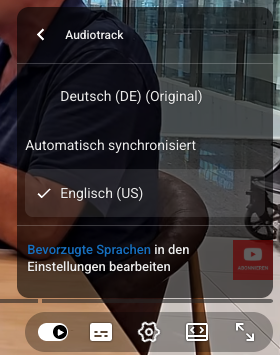
Watch in English
In the YouTube player, open Settings, choose Audio track, then English (US).
 No more ad blocks with a Supporter subscription!