The Emigrant's Handbook
Part 5: Health and Insurance
Health is one of those areas many people like to push aside as long as they feel well. That is precisely where the risk lies. If you become ill, need an operation, or suddenly find yourself in hospital, you no longer have the peace of mind to read insurance conditions, compare brokers, or organise money at short notice.
Abroad, illness is not only a medical subject. It is also an organisational and financial risk. You need insurance, emergency money, a medication plan, contacts, and a realistic view of your age and possible pre-existing conditions.
Without this structure, a beautiful dream of emigrating can very quickly become very expensive.
5.1 International Health Insurance
Normal travel insurance is often not enough for genuine emigration. It is intended for holidays, not for a new life. The difference is considerable.
A holiday means a limited duration, a planned return journey, and emergency protection. Emigrating means permanent risk, growing older abroad, possible pre-existing conditions, local clinics, different billing systems, and often considerably less protection from German structures.
In the Philippines, private hospitals may request advance payments beyond the basic initial care legally protected in emergencies or serious cases. This may also happen in other countries, only with different amounts and different rules. Insurance is therefore not simply a piece of paper for your folder. In a serious case, it may determine how further treatment is billed and whether you remain financially stable afterwards.
It is important to distinguish between short-term travel insurance, long-term overseas health insurance, local health insurance, and comprehensive international health insurance. These are not merely different names. Behind them are different terms, exclusions, age limits, areas of cover, and cancellation rules.
Germany does not automatically have “the best healthcare system” for every case. Nor is healthcare abroad automatically worse. In some countries, private care gives you very fast, personal, and technically modern service. In other situations, you will be glad if repatriation, German specialists, or a familiar system remain accessible.
The decisive issue is not national pride, but your concrete chain of care:
Where will you go?
Who will pay?
Who will decide?
Who will transport you?
And what happens after a serious diagnosis?
Before taking out cover, examine at least these points: inpatient treatment, outpatient treatment, medication, pre-existing conditions, cancer, heart disease, stroke, accident, dental treatment, psychotherapy, deductible, waiting periods, exclusions, maximum benefit, age-related premium increases, the insurer's right to cancel, geographical area, repatriation, direct billing with hospitals, and emergency hotline.
Direct billing is an important point in its own right. If the insurer settles directly with the hospital, that can be worth its weight in gold during an emergency. If, by contrast, you must pay first and claim later, you need sufficient liquidity.
Good insurance therefore does not replace your emergency account. It complements it.
For this very reason, I did not look only at the price when choosing my own health insurance. I had also seriously examined a cheaper local offer. But the small print contained exclusions that were too risky for me in a serious case.
Insurance that is cheaper on paper can become the most expensive decision of your life in hospital.
I would rather say this too clearly once:
Cheap insurance that fails to pay precisely when matters become serious is not a saving. It is a risk with a pretty PDF.
One question appears in emigrant forums as reliably as a bad-tempered alarm clock: do you need health insurance abroad at all, or is it enough to remain healthy and simply pay for yourself if something serious happens?
A surprising number of people believe that health insurance abroad is completely overrated.
That sounds about as reassuring as the idea that you do not need a parachute as long as you believe firmly enough in a soft landing.
This model stands or falls with a single assumption: that serious illnesses remain polite and follow your financial plan. Cancer, stroke, or intensive care do not ask in advance whether this month is convenient. And a bill of EUR 100,000 does not happen only to other people. Closing your eyes and refusing to think about it does not protect you from exactly such a bill eventually reaching you too.
“I have savings” sounds responsible at first, until you do the calculation. Anyone living abroad without insurance needs a genuine reserve, not merely a symbolic one. As a personal planning figure, I would regard EUR 20,000 in reserve as more of an absolute minimum for remaining capable of acting during an emergency.
Nevertheless, many people hope to get away with a budget policy that excludes everything expensive.
Yes, it may soothe the conscience. But during a serious case, it may be about as useful as an umbrella with a hole. Depending on the policy, age, health, and extent of cover, genuine health insurance at an older age can quickly cost EUR 500 to 1,000 per month. That is not a universally applicable price statement but a rough planning figure: people do not become younger.
And here I will be honest with you: if you can afford neither the insurance nor the reserve, you may still emigrate. But you will live without a safety net, fully aware that the aches and ailments may become more numerous and unpleasant with age, that something more serious may eventually happen, and that every human being is ultimately mortal.
Not because I wish that upon you. But because it forms part of honest planning.
Anyone who factors that in and accepts it makes a conscious decision. Anyone who suppresses it is not really making a decision at all.
Yes, you can live abroad without health insurance, just as you can drive a car without good brakes. It is not prohibited. It is merely very brave—and potentially very expensive.
Concrete next step: Before taking out cover, create a comparison table containing term, maximum benefit, pre-existing conditions, age limits, inpatient/outpatient cover, direct billing, deductible, repatriation, and cancellation rules. Obtain written confirmation of critical points.
Ideal time: 3 to 6 months before departure; earlier if you have pre-existing conditions.
Federal Ministry of Health — insurance cover abroad
Federal Ministry of Health — health and long-term care insurance abroad / DVKA
Philippines Republic Act No. 10932 — Anti-Hospital Deposit Law


5.2 Standby Cover, Statutory and Private Insurance, and Ability to Return
Anyone leaving German health insurance should clarify beforehand whether and how a later return is possible. Not after five years. Not only once a diagnosis is already looming. Beforehand.
For statutory health insurance, private health insurance, and long-term care insurance, many questions depend on your specific status: are you a pensioner, employee, self-employed, voluntarily insured, or privately insured? Do you have a residence in Germany, in the EU/EEA, Switzerland, a treaty country, or a third country?
This is not a subject for pub logic or quick answers from forums. Your actual situation is what counts.
Statutory health insurance generally provides benefits domestically. Special rules apply to temporary stays in the EU, EEA, Switzerland, and some treaty countries. But if you live permanently outside these systems, the position is different.
You should therefore clarify your specific situation with your health insurer, the DVKA, or a qualified adviser before relying on assumptions.
Standby cover may be useful, especially with private health insurance or if you want to preserve your ability to return. It costs money, but depending on the case may offer the advantage of making it easier to return to a previous tariff or insurance cover later.
Whether this makes sense for you depends heavily on age, health, insurance history, and the likelihood of returning.
With statutory health insurance, do not begin playing games with sham residence or grey areas. If you remain officially registered in Germany but in fact live permanently abroad, health insurers, tax authorities, other authorities, or insurers may later ask very uncomfortable questions.
This handbook provides no tricks for that.
The proper route is to examine matters openly, obtain written clarification, and document your situation transparently.
Also consider long-term care. Many people plan for hospitals, operations, and medical appointments, but not care needs, dementia, permanent support, or repatriation. It is uncomfortable, but real.
If you are old enough to think about retirement abroad, you are also old enough to think about care abroad.
Concrete next step: Before departure, ask your health insurer or insurance company five questions in writing: what happens when I move my residence? Which benefits apply in the destination country? How does returning work? Is standby cover or a suspension arrangement available? What applies to long-term care insurance and pre-existing conditions?
Ideal time: 3 to 6 months before departure.
DVKA guidance for pensioners resident abroad
Federal Ministry of Health — insurance cover abroad
Federal Ministry of Health — persons covered by long-term care insurance
5.3 Medication, Chronic Illnesses, and Pharmacies
Not every medication is identically available in the Philippines. Active-ingredient names, dosages, import rules, and differences in quality may matter. Anyone with a chronic illness must therefore clarify before departure how medication can be obtained over the long term.
When looking for medication, do not search only for the German brand name. The same medication often has a completely different name in other countries. The active ingredient is more important than the brand.
If, for example, you search only for the German product name, you may find nothing even though the same active ingredient is available under a different name.
The Philippines has an official FDA database for registered medicines. You can search it by generic name, brand name, dosage strength, and manufacturer. Other countries often have similar databases maintained by their medicines authorities.
That is no guarantee that the pharmacy around the corner actually has the medication in stock. But it is a considerably better starting point than searching online blindly.
Before departure, medical reports, diagnoses, medication plans, and prescriptions should ideally be available in English. A sensible initial supply may also help.
At the same time, customs and import rules must be observed. For certain medicines, painkillers, psychotropic medication, or narcotics, you cannot simply pack by instinct.
Also think very practically: must the medication be refrigerated? Are stable cold chains available in the destination country? Is there a pharmacy within reach? Are alternative preparations available? Can a local doctor prescribe it? What will you do during supply problems?
Anyone with a chronic illness emigrates not only with a suitcase, but with a small medical operating system.
If you take only one point from this section, make it this:
Search by active ingredient, not by German brand name.
Concrete next step: Create a medication list containing German name, active ingredient, dosage, reason for taking it, alternative preparations, and an English medical confirmation. Then check the active ingredient and dosage in the destination country's official medicines database.
Ideal time: 3 to 6 months before departure; earlier with a chronic illness.
Philippine FDA database of registered medicines
Mercury Drug Philippines customer service: [email protected]
5.4 Mental Health and Culture Shock
Culture shock is not a theoretical concept from some guidebook. It is something many emigrants experience in very practical terms. After the initial euphoria, some people experience frustration, loneliness, irritability, homesickness, or relationship stress. If you know that beforehand, you can deal with it much better.
Helpful measures include routines, social contacts, realistic expectations, exercise, a meaningful daily structure, and professional help if necessary. People who emigrate completely without a network or hope that a new partner will automatically solve all old problems are especially vulnerable.
Family and friends are not always missed immediately on the first day. At the beginning, everything is new, warm, exciting, and there is plenty to organise. The more difficult moment often comes later, when you realise that the friend you used to call spontaneously is not there locally. Birthdays, Sundays, small crises, illness, and completely ordinary days feel different when your old network is far away.
A new network is therefore not a luxury. It is an important part of your stability. Do not look only for other Germans at the bar, but for people who want to live in a similar way to you: through sport, work, family, volunteering, business, a congregation, neighbourhood, courses, the local language, or hobbies.
Emigrating becomes easier when you arrive not only geographically, but socially too.
At the beginning, emigrating may feel a little like a holiday. You may sleep late, drive around, sit on the beach, try new restaurants, and simply arrive for a while. That is completely normal.
It becomes dangerous only when this initial phase turns into your permanent everyday life: get up late, phone, beach, pub, alcohol, gambling, dating app, sleep again. It may sound pleasant for two weeks. As a model for life, it often ends badly.
In Germany, work gave many people eight hours of structure each day. Even if they did not like the job, there was a framework: get up, shower, leave, colleagues, tasks, lunch break, finish work. When that framework suddenly disappears, a hole develops. And this hole does not automatically fill with happiness.
It often fills with whatever is most readily available: boredom, brooding, beer, YouTube, arguments, impulsive spending, or the wrong relationships.
Therefore, in the new country, you need not only money and a visa, but also a daily plan. Not like a prison, but as a handrail. A fixed time to get up, exercise, shopping, language practice, administration, a project, contacts, household tasks, learning, sport, volunteering, a hobby, small journeys, work on your own business, or consultation appointments.
It almost does not matter what it is, as long as it prevents you from passively drifting through every day.
Good activities in the new country are things that connect you with real everyday life: learn the local language, learn to cook, compare markets, understand the neighbourhood, build a fitness routine, hike, dive, take photographs, make YouTube videos, write a blog, join a club or congregation, help animals, attend local courses, work remotely, offer consulting, garden, repair things, or undertake small projects.
The important point is that you do not merely consume the country. You build a life in it.
If you take only one point from this section, make it this:
Anyone emigrating without a job, family, or fixed task must build their own structure. Otherwise, freedom quickly becomes emptiness.
Concrete next step: Before departure, write a simple weekly plan for the first 90 days: getting-up time, exercise, learning time, exploration, administration, social contacts, project time, and a rest day. Add a network list containing three places or groups through which you can build genuine contacts. After four weeks, check honestly: are you already living everyday life, or only an extended holiday?
Ideal time: Prepare consciously before departure and take it seriously during the first six months.
Chapter 5 Checklist: Insurance and Health Plan
Tick an item only after you can support it with a figure, date, document, or tested decision. The full one-page worksheet is in the appendix.
- Which outpatient, inpatient, and pre-existing-condition treatment is covered?
- Does the insurer pay directly, or must I pay first?
- Are the excess, maximum benefit, and repatriation cover genuinely sufficient?
- Are medicines, active ingredients, prescriptions, and medical reports prepared?
- Do I know the local hospital, doctor, and pharmacy, and my plan for culture shock, loneliness, or a mental-health crisis?
- Will emergency cash, transport, and payment routes cover a major bill?
Practical check
Checklist at the end
Use the short checklist after reading all sections.
Go to checklist →Who is online?
- Visitors on the website
- Loading …
- Registered members
- Loading …
- Online now
Calendar
Dates at a glance
Calendar month is loading.
Dates are loading.
Dates today
Next 7 days

Auswandern auf Probe? Henning über Freiheit, Kosten und Leben in Asien (1)
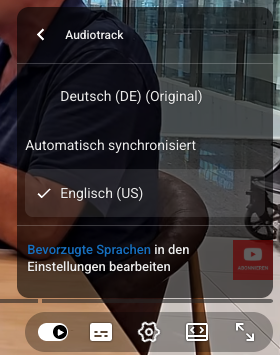
Watch in English
In the YouTube player, open Settings, choose Audio track, then English (US).
 No more ad blocks with a Supporter subscription!