The Emigrant's Handbook
Part 2: Money, Income and Financial Structure
2.1 Income Model: What Will You Live on Until Retirement?
One of the most important questions does not arise only once you are already sitting in the destination country. It arises years beforehand:
What will you actually live on?
Whether you have a secure pension, sufficient assets, or reliable passive income makes an enormous difference. That is a completely different starting position from having to bridge ten or fifteen years financially until retirement.
Many people first talk about countries, housing, and living costs. That is understandable because these topics feel more tangible and often more pleasant. Nevertheless, many skip the more uncomfortable question: will enough money come in every month without immediately making you dependent in the new country?
A large part of your later freedom depends on precisely that. A beautiful destination country is of little use if, after three months, you have to search frantically for any work at all.
Today, I would put this point very clearly: without a large buffer or reliable cash flow, you should not plan to emigrate. The move is then not a freedom project, but a bet—with the cancellation of your home, health insurance, relationship, family, and retirement provision in the background.
I underestimated this calculation myself and later had to reorganise many things. I emigrated in 2014 with an inheritance and severance payment and had calculated that it would last for the 15 years until retirement. What I had not adequately considered at the time was that my entire model depended more heavily on the exchange rate than I truly understood.
During my holidays in the Philippines, I was lucky. I received a great many pesos for my euros. Shortly after I emigrated in 2014, however, the crash came. With only small recoveries, for almost ten years I received fewer pesos per euro than before. Instead of PHP 60 per euro, the average was only just under 57.
That does not sound like much at first. But it is more than five percent less than I had calculated before 2014. For this chapter, the decisive point is not an individual purchase but the dependence behind it: if your income comes in euros and your life is paid for in pesos, baht, guaraníes, or another currency, then the exchange rate is part of your income model.
Looking back, I certainly spent EUR 10,000 more than planned during my first five years as a result. EUR 10,000 that I lacked in the long term. The difficult part was that I only truly realised all of this much too late.
Of course, nobody can predict the future. The exchange rate was only one part. Who was thinking about things such as COVID in 2014?
When I looked at my reserves in 2021 and began YouTube to earn a little extra, I had a clear idea: “I will show you the beauty of the Philippines—beaches, places, people.” Six months later, COVID made this idea practically pointless. Beaches and places were closed, and people were hidden behind masks. Who wants to watch videos like that?
So I needed Plan B.
I went back to work in the Philippines. In a call centre, partly from home, but always on late or night shifts. It helped me survive, but it was not a holiday life. It was necessary to keep the emigration plan alive financially.
That is precisely why an income model must answer not only “How much do I have?” Equally important is the question: what happens if the exchange rate, customers, a platform, my health, or a crisis turns against me?
The picture is completely different if you still have to work. If you emigrate when you are young and therefore will not later receive a pension from Germany, you cannot sit back and think: from age 67, I can live calmly. No: without a pension, you may have to work until you die if you do not manage to build your own retirement provision.
Anyone who has to work abroad needs an income model that suits the destination country. That may be a remote job, self-employment with clients in Europe, an online business, consulting, content, an existing company, rental income, investment income, or a local job.
But each of these models has its own risks: visas, taxes, language, time zones, payment routes, local salaries, competition, and health insurance.
Many digital nomads today travel with remote jobs. That can work. But it becomes dangerous when they use only remote-job websites and jump from provider to provider. They often overlook that they are not building a long-term reputation with an employer. That very reputation can help when things become serious and you genuinely need a job.
In practice, being a digital nomad often means modern slave labour and a hire-and-fire mentality. At age 25, you may be able to do that for two or three years while travelling the world, using up savings on the side, and having adventures. But it is not a work model that will carry you for 30 years or longer.
One simple question already shows that “get rich quick” or “lose weight quickly” programmes are not even worth reading: if they worked, why is there so much poverty and excess weight in the world?
So keep your hands off them. Concentrate on what matters—your own work.
Another especially important point is that a business rarely supports you from the first month. If you want to build your own income, allow one to two years of lead time before it genuinely becomes stable and no longer consumes 200 percent of your energy.
That is no reason not to do it. But it is a clear indication that you must start early. Prepare for a one-to-two-year dry spell.
This does not apply only to the Philippines. Whether Paraguay, Thailand, Georgia, Spain, or any other country: if you must live from work or a business, the income question belongs right at the front of your planning. The details differ by country. But the fundamental question remains the same everywhere.
Geoarbitrage can be a strong model: you earn in euros, dollars, or another strong currency and spend in a cheaper local currency. This can increase your freedom enormously.
But it works only if your income is stable and your costs have been calculated realistically. Geoarbitrage is not a magic trick. If you suddenly want Western housing standards, an international school, private health insurance, good internet, air conditioning, travel, and reserves in Thailand, Mexico, or the Philippines, even a supposedly inexpensive country quickly becomes expensive.
The mistaken assumption is often: “Everything is cheaper there, so I need less income.”
But if you work there, you do not earn according to European standards; you earn according to local standards. And those are often far lower than you think. Without the “language bonus” I received as a German, I would have taken home about EUR 400 per month as an ordinary call-centre employee.
Therefore, consider very carefully:
- What standard of living do I really want?
- Which currency do I earn?
- Which currency do I spend?
- And what happens if exchange rates, customers, or costs turn against me?
Concrete next step: Write your income model on one page: minimum monthly requirement, realistic source of income, lead time, legal hurdles, tax questions, currency, geoarbitrage assumption, reserves, and Plan B if it takes 12 months longer.
Ideal time: 24 to 12 months before departure; for building a business, preferably two years beforehand.
2.2 Realistic Monthly Budget
If your financial plan looks good on paper but is actually stretched to its limit, it is not a reliable plan. It is hope. And abroad, hope pays for neither a hospital nor a return flight nor a wrong housing decision.
Money determines not only how comfortably you live. It also determines freedom, dignity, and peace of mind.
The fairy tale of a luxury life for a few hundred euros persists stubbornly. Yes, some things can be cheaper than in Germany. And yes, you can somehow get by on EUR 800 per month in the Philippines. But as soon as you want reasonably decent housing, live with air conditioning, need stable internet, value a safe area, do not want to turn every peso over three times, and take health insurance seriously, the calculation already looks very different.
Many people make emigration look financially attractive because they compare only rent and food. But that is precisely what is not enough.
Nor should you calculate with the cheapest local standard when you actually expect a Western-influenced everyday life. A washing machine, tumble dryer, dishwasher, quiet location, ride service instead of a jeepney, imported food, international school, coworking, a good mattress, reliable electricity, air conditioning, and backup internet cost money.
A country can be inexpensive overall while your chosen lifestyle remains expensive.
An honest monthly budget must therefore also include transport, visas, health insurance, medication, reserves, repairs, clothing, leisure, domestic travel, and often support for a partner or family. In the Philippines, for example, electricity, hospital co-payments, and spontaneous special expenses are frequently underestimated.
The problem is rarely the normal month. The problem is the month in which three things go wrong at once.
The exchange-rate question from 2.1 becomes very practical in the monthly budget. Inflation shows whether prices in the destination country are rising. The exchange rate shows how many units of local currency your euros, francs, or dollars can still buy. Both work together, but they are two different risks.
Pensioners in particular often think first about inflation because pensions in Germany are at least adjusted regularly. But if you receive euros and live in pesos, baht, guaraníes, or another currency, the exchange rate nevertheless helps determine your actual purchasing power every month.
Therefore, do not calculate your budget using only today's rate, but in several columns.
Take the Philippines: if you emigrate today in 2026 at around 70 pesos to one euro, the calculation initially looks excellent. But can you say whether you will still receive 70 pesos in five years? At 66 pesos, you already lose around 5.7 percent of local purchasing power. That is more than the 4.24 percent by which the German statutory pension was increased on 1 July 2026. At 63 pesos, you lose 10 percent. Your pension can rise in euros and still buy you less everyday life in pesos. How will you compensate for this loss? Will you reduce your spending, draw on reserves, or need additional income? That answer belongs in your budget today, not in five years.
Your table should therefore not merely say: “I have EUR 1,500.”
It should say: “What does EUR 1,500 mean at 70:1, at 66:1, and at 63:1?” That is 105,000, 99,000, or 94,500 pesos per month. Between the first and third scenarios, the same pension leaves you 10,500 pesos short every month. Only these three answers show whether your model still works when the exchange rate ends its friendly phase.
So do not look only at today's exchange rate. Examine at least one bad scenario. What happens to your budget if the euro loses 10 to 15 percent against your destination currency? Which costs remain the same? Which can you reduce? Which are non-negotiable?
If your plan collapses immediately under this test, the exchange rate is not the actual problem. Your budget was too tight.
On 14 July 2026, the ECB reference rate was PHP 70.362 per euro. But how long will that remain the case? Look at previous years. If you emigrate today at about 70:1 and think you are rich, what will you do in 2035 if the rate has fallen below 60:1?
For a quick plausibility check and historical rate movements, you can also use the XE Currency Converter. The link is useful here because it lets you compare your good, middle, and bad budget scenarios quickly. Do not confuse the information rate shown there with the actual card or transfer rate including fees.
So calculate today at 60:1 and be pleased if a better rate still saves you money at present. Then the good rate is a bonus rather than the supporting pillar of your emigration.
Then there is the start-up budget. The first months are almost always more expensive than later everyday life. Deposit, furniture, household items, initial transport, documents, fees, mistaken purchases, medical checks, and the normal learning curve cost money. Anyone who arrives with only the planned monthly budget often begins under pressure.
My first longer-term home in Cebu was a condominium in Mabolo. I did not want to make the leap from a Western lifestyle to life in the Philippines too quickly. Yes, condominiums look wonderful at first glance: glossy pictures, a pool, practical, clean. But reality is often different.
Condominiums are twice as expensive as townhouses. They are as anonymous as German high-rise housing estates. And especially during evenings and weekends, the pool is far too small for the hundreds of families with children who live there and are looking for recreation.
And there is something else: first you rent only the condominium. Then you buy a car and discover that a parking space was not included in the rent. That costs extra, if one is available at all. Not all condominiums were planned with sufficient parking.
My advice, therefore, is to spare yourself a condominium. Perhaps use one to arrive for the first two or three months in a new city. But even then, only so you can calmly look for a less expensive apartment or house.
When I moved from the condominium to a townhouse after the first year, the difference was immediately noticeable: 50 percent more living space for half the price, together with a considerably more human sense of home.
You do not see learning curves like these as a tourist in a hotel. You notice them only when you pay incidental costs, hear neighbours, organise repairs, and honestly ask yourself after a few months: do I really want to live like this?
If you take only one point from this section, make it this:
Do not calculate for an attractive result; calculate for resilience. A budget is good only when it can also withstand a bad month.
Concrete next step: Build two sets of figures: your realistic monthly budget for normal everyday life and a separate start-up budget for the first six months, including a reserve for beginners' mistakes. Also calculate an exchange-rate scenario: what happens if your destination currency moves 10 to 15 percent against you?
Ideal time: 12 to 6 months before departure, then adjust monthly.
2.3 Emergency Reserve for Your Time as an Emigrant
The emergency reserve for your life abroad is sacred. It is not intended for furniture. Not for a motorbike. Not for a spontaneous business idea. Nor for situations in which someone puts you under emotional pressure.
This money is only for genuine emergencies in emigrant life: illness, a broken phone, broken glasses, necessary documents, a short-notice move, a visa fee, a delayed incoming payment, or a month in which the exchange rate suddenly turns against you.
Everything concerning the escape account and returning to Germany is collected in Part 15. This section deals only with the reserve that keeps you capable of acting in the destination country without immediately having to touch your long-term planning.
This reserve must be kept separately from everyday money. If it is in the same account as rent, food, going out, and small favours, it slowly becomes invisible. And invisible money eventually disappears.
A separate pot for normal fluctuations and emergencies abroad is therefore practical. Not as an investment. Not as play money. But as a calm buffer that gives you room to act in an emergency.
What matters is not only the size of the reserve, but also access to it. A single credit card is not a strategy. Nor is a single bank.
You need at least two independent routes: a reliable account, a functioning card, a tested transfer route, and a small cash reserve.
And please put all of this in place before thinking you will sort it out “once you are there.”
Concrete next step: Set a dedicated overseas emergency reserve, keep it separate from your everyday account, and test access with a real card, a genuine login, and a functioning transfer route.
Ideal time: Fully established no later than before the flight.
2.4 Bank Account, Credit Card, and Money Transfer
(Revised: 18 June 2026)
Do not wait until you are already at the airport to deal with bank accounts, credit cards, and money transfers. Bank access is one of those subjects that remains almost invisible in everyday life while everything works. But as soon as a login fails, a card is blocked, or a TAN procedure is no longer accessible, you very quickly realise how dependent you are on functioning access, cards, security procedures, and contacts.
Many banks react sensitively to foreign addresses, the absence of a registered German address, security queries, or unusual access from abroad. You should therefore examine your setup before deregistering, not afterwards.
Can your bank process a foreign address properly? Will the TAN procedure also work with your future telephone number? How will you obtain replacement cards? Which limits apply? What happens if your phone is lost?
Properly continuing an existing account is usually much easier than trying frantically to open a new German account after deregistration. Some providers accept foreign addresses without difficulty. Others want a German address or react sensitively if an account is used permanently from abroad.
Therefore, before departure, clarify which address your bank may hold, which documents it wants to see when you move away, and whether unusual card use abroad can quickly lead to blocks.
The basic bank account is not a trump card for every emigration. The German right to a basic account primarily helps consumers lawfully resident in the EU, expressly including people without a fixed address. But if you move permanently to a third country and only then want to open a German account from there, it can become considerably more complicated.
Therefore, plan your bank access before moving away and not as a rescue attempt afterwards.
For money transfers to countries such as the Philippines, traditional banks are often not the most elegant solution. Multi-currency services such as Wise may be useful. But you must also set up and verify such services beforehand and genuinely test them once. Theory is of little help when you are standing at a cash machine and the system chooses that exact moment not to cooperate.
If a bank transfer or card fails and the recipient needs cash, Western Union Germany can provide an additional fallback route. The link belongs here because a resilient payment setup should cover not only the cheapest normal case but also a functioning alternative. Before every use, compare the fee, exchange rate, payout method, and identity checks.
For larger amounts, approach the subject properly but not fearfully. It is not automatically prohibited to transfer EUR 50,000, 100,000, or considerably more legally if the source, purpose, tax position, and recipient are properly documented. Banks and payment service providers must, however, carry out anti-money-laundering checks and may ask for evidence. That is not a personal attack, but their duty.
It is important to separate the issues properly.
In the Philippines, the frequently mentioned USD 10,000 primarily concerns carrying foreign currency or comparable bearer instruments across the border into or out of the country. Amounts above that must be declared.
Different review processes apply to bank transfers and payment services. Even smaller amounts may attract attention if they do not fit your profile. Large amounts, by contrast, can work if documents, proof of origin, and purpose are plausible.
Under no circumstances make the beginner's mistake of artificially splitting larger transfers into many small pieces merely to avoid checks. That can appear especially suspicious.
It is better to clarify in advance with the bank or service provider which documents are required and then make the transfer cleanly and transparently. Not secretly, not frantically, not in fragments, but documented.
Local accounts and apps can be very useful later. But they do not replace your sound basic setup before departure. In the Philippines, an additional issue is that opening a local account as a foreigner can initially be difficult depending on the bank, status, and documents. So do not rely on a solution you may not yet be able to obtain at the beginning.
Concrete next step: Establish at least two independent payment routes before departure, test both with small real transactions, and document all access details, blocking numbers, and limits in a secure place. For larger transfers, also prepare evidence: bank statements, sale contracts, tax documents, pension or salary evidence, gift or inheritance evidence, and a brief explanation of the purpose.
Ideal time: 3 to 6 months before departure.
Sources and Guidance
BSP Foreign Exchange Regulations
Philippine Bureau of Customs Foreign Currency
2.5 Brokerage Accounts, ETFs, Crypto, and Moving Abroad
As soon as brokerage accounts, ETFs, crypto, company shares, or larger assets enter the picture, you have left simple emigration romance behind. It is then no longer only about flights, housing, and health insurance. It is also about tax status, broker conditions, documentation, reporting obligations, and what moving away actually triggers in your particular case.
Many people suppress this subject because it is dry or because an incredible amount of half-knowledge circulates online. That is exactly what makes it dangerous.
Even the simple question of whether your broker properly supports a foreign address may later determine whether you have relaxed access or suddenly have to act while markets are moving and you are abroad. Depending on the case, ETFs, funds, holdings, or crypto bring additional tax issues and documentation obligations.
After deregistering from Germany, international providers may offer different possibilities than they do to customers resident in Germany. This may affect brokers, forex providers, banks, wallets, or custodians.
Examples that can be reviewed editorially include international brokers and forex providers such as Interactive Brokers, Swissquote, Saxo, IC Markets, or BlackBull. But this is expressly not a recommendation simply to park money there.
Especially with “money abroad,” offshore structures, or custody outside the EU, you must examine three things: regulation, deposit protection or client-money protection, and tax or reporting obligations.
An account or broker in New Zealand, Switzerland, the Cayman Islands, or elsewhere may be possible depending on your residence. But it is not automatically safer, legally simpler, or harmless for tax purposes. Anyone who looks only for “better opportunities” and forgets documentation may be building a problem for later.
I phrase this deliberately cautiously: this chapter is not tax advice. But it is a very clear warning not to deal with this topic in passing.
Anyone with assets should not speculate before deregistering, but obtain a proper assessment of what matters before, during, and after the move.
I worked with shares early on and later also with forex and crypto. My most important lesson from this is that being abroad does not automatically make trading smarter.
Sleeping in the Philippines while Europe and the United States are trading can be brutal when positions are open. I therefore stopped forex and am considerably more cautious today.
For emigrants in particular: never invest money that is actually intended to secure your health insurance, return reserve, or next twelve months of living.
Concrete next step: Create an asset list containing all brokerage accounts, exchanges, wallets, holdings, and brokers, and go through it point by point with a specialist tax adviser or emigration-tax adviser. Add for each provider: accepted countries of residence, regulation, client-money protection, tax reporting, withdrawal route, and risk if the account is blocked.
Ideal time: 6 to 12 months before departure.
Broker or trading partner programmes such as Pepperstone, IC Markets, or BlackBull are not actively pursued as affiliates if they require proprietary trading, introducing-broker arrangements, or active promotion of trading.
This area therefore remains editorially a risk and information chapter, not a broker recommendation.
2.6 Saving Before Emigration: Build Capital Instead of Hoping
Earning money and keeping money are two different skills. Many emigrants first think about the destination country: where is it cheap? Where is the weather better? Where can you live more freely?
But the more important question comes earlier: how do you build enough capital before departure so that you do not have to make every decision abroad out of fear about money?
The good news is that you do not always need a high income for this. A low or medium income naturally makes it harder, but not impossible. The decisive factor is not one brilliant trick. It is a system you repeat every month: a clear target, real figures, less money flowing out, better income, separate accounts, and a willingness to exchange a few comfortable habits for later freedom.
The first genuinely useful point is a visible target. Not vaguely, “I want to leave someday,” but a concrete amount with a concrete date.
That may be EUR 20,000, 50,000, or 100,000. The right amount depends on your age, destination country, family, health, income, return plan, and personal risk tolerance. But without a clear target, saving quickly becomes merely “let us see what is left over.”
And that is exactly when nothing is usually left over.
The second powerful point is an honest expenditure record. Write down every expense for at least three months and also review the bank statements from the last 12 to 24 months. Not only rent and electricity. Include coffee while out, delivered meals, streaming, apps, insurance, car repairs, clothing, small items, spontaneous online orders, and annual fees.
Only when you see your financial leaks in black and white can you decide which expenses genuinely provide quality of life and which are only habits.
The 30-day subscription test is also very helpful: cancel or pause everything that is not essential and observe for one month what you truly miss. Afterwards, restore only the one to three services that genuinely give you value.
This is not a call to cancel important protection blindly. Occupational disability cover, liability insurance, health insurance, vehicles, home, family, or the ability to return must be reviewed properly. But many people have simply accumulated subscriptions and policies over the years instead of deciding consciously. A surprising amount of money often lies there.
An account system makes your progress visible. At minimum, the following separation is practical: an everyday account for running costs, a repairs and fluctuations buffer for the car, devices, dentist, or household problems, an emigration account for the target capital, and a separate emergency reserve.
A brokerage account or ETF savings plan may make sense if the time horizon and risk suit your situation. But money for health insurance, a return flight, visas, and the first months abroad does not belong in a volatile investment.
Changing jobs is also underestimated. Many people save on coffee while losing years in a job that pays too little. If a change produces EUR 200 more net income each month, that is EUR 2,400 per year and EUR 24,000 in ten years—even before interest, special payments, or further salary increases are counted.
The saving phase therefore includes not only “spend less,” but also “earn better.” That may mean a salary discussion, changing employers, an additional qualification, shift allowances, remote-work capability, better language skills, or a side project.
Decluttering is doubly beneficial. You turn things that merely stand around into money and simultaneously reduce the burden of a later move. Everything you do not use, do not love, or would not take into your new life belongs on the sale list: electronics, tools, furniture, collections, sports equipment, clothing, spare parts, gardening items.
An individual sale may seem small. But ten small sales may ultimately finance the first flight, insurance, a run of documents, or an extra month of calm.
Hobbies, too, may be examined honestly. Not all of them. A life without joy is not a good plan. But a very expensive hobby that costs several thousand euros each year may delay your emigration by years.
The best question is not, “Am I still allowed to treat myself?” The better question is, “Does this hobby fit my larger goal?”
Sometimes you replace an expensive hobby with a cheaper one. Sometimes you do it less often. And sometimes that very sacrifice is the price of later freedom.
Additional income does not have to be glamorous. Selling things, small services, seasonal work, garden produce, tutoring, translation, repair help, weekend work, online services, a mini-job, content, or simple digital products can help.
The decisive point is that this money must not disappear into everyday life. Every extra euro goes immediately into the emigration account or repairs buffer.
Later, abroad, an additional rule applies: every activity must comply with visa, tax, work-permit, and local rules.
The powerful lever in this entire method is not frugality for its own sake. What is powerful is the combination: you make your target visible, measure your expenses, stop unconscious financial leaks, actively increase your income, turn possessions into capital, and separate your money so that progress does not accidentally disappear again.
It sounds boring. But that is precisely why it works.
With a partner or family, the subject becomes even more important. Saving secretly or imposing the goal on the other person is not a good foundation. If emigration is to be a joint project, you need a joint financial conversation: target amount, sacrifices, children, security, debt, risk limit, and what happens if one person no longer wants to continue.
Emigration rarely fails because of one large expense. It often fails because two people are internally living according to different financial plans.
Concrete next step: Create a saving-phase page: target amount, date, current position, monthly saving rate, three-month expenditure record, subscription and insurance review, sale list, income levers, and separate accounts. Then decide on one concrete action every week: cancel, sell, negotiate, apply, learn, or transfer money.
Ideal time: As soon as the idea of emigrating becomes serious; for a larger capital target, five to two years beforehand.
Chapter 2 Checklist: Financial Structure and Saving Phase
Tick an item only after you can support it with a figure, date, document, or tested decision. The full one-page worksheet is in the appendix.
- What will support me in month 7, month 18, and during an income failure?
- Are my monthly, start-up, and emergency budgets based on real figures?
- Are my escape fund and return reserve separate from everyday money?
- Do at least two independent payment routes work abroad?
- Can my plan withstand exchange-rate, cost, and income stress?
- Have I fixed a savings target, target date, and next financial action?
Practical check
Checklist at the end
Use the short checklist after reading all sections.
Go to checklist →Who is online?
- Visitors on the website
- Loading …
- Registered members
- Loading …
- Online now
Calendar
Dates at a glance
Calendar month is loading.
Dates are loading.
Dates today
Next 7 days

Auswandern auf Probe? Henning über Freiheit, Kosten und Leben in Asien (1)
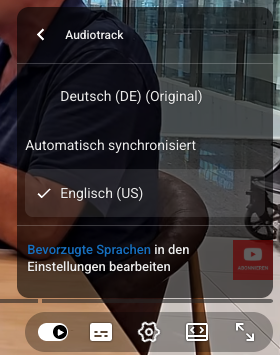
Watch in English
In the YouTube player, open Settings, choose Audio track, then English (US).
 No more ad blocks with a Supporter subscription!