The Emigrant's Handbook
Part 0: Fast Timeline
Five to two years beforehand
, the romantic part of emigrating has not yet begun; the honest part has. During this phase, you seriously examine several destination countries and do not compare them only by the feeling you had after two lovely weeks on holiday. A holiday can show you that a place is beautiful. But it does not yet show you whether you can live there when the refrigerator is empty, you need a doctor, bills have to be paid, and the traffic takes place right outside your door every day.
Ideally, therefore, visit serious candidates several times and not always under the same conditions. Do not travel only during the best season. If possible, experience a country once in the dry season, once in the rain, and once not from a hotel perspective but closer to normal everyday life. Look at different regions. Compare language, climate, medical care, safety, internet, cost of living, and also your own feelings. It is not only your mind that has to come along; your body does too. If you still have several years before retirement, another particularly important question begins during this phase: What will you live on until then?
An optional intermediate route
can make sense if “forever” still feels too big. Not everyone has to cancel everything immediately, give up their home, and board a plane with a solemnly final expression. For some people, a travelling start is considerably wiser: first examine income, business, residence, and tax structure properly, then test several countries for a few weeks or months. That is not aimless wandering if it is planned. It is a learning phase. It becomes difficult only when you confuse freedom of travel with a lack of structure. A backpack is no substitute for a financial plan.
Twenty-four to twelve months beforehand
, the idea slowly becomes a real project. Now you reduce your selection to one or two serious candidates and no longer test only the holiday feeling, but everyday life. Housing, climate, neighbourhood, language, traffic, safety, internet, shopping options, and medical care are no longer merely researched online; they are actually experienced. A home can look wonderful in pictures and still be too noisy, too damp, or too far from the nearest hospital in everyday life. A district can feel pleasant during the day and suddenly no longer suit you in the evening.
If you must work in the destination country, you should seriously begin looking at the job market, visa rules, language, salary levels, and application routes during this phase. Do not wait until you are already there, the rent is running, and the pressure is rising. If you need your own business, it must now be built or at least tested under realistic conditions. A business model that works only on paper does not pay for health insurance abroad.
Twelve to six months beforehand
comes the phase in which the beautiful dream is tested against numbers and paperwork. If the destination country still holds up after several visits, calculate the budget, visas, insurance, tax questions, and return plan properly. Your income must no longer be merely an idea. You need real customers, real applications, real commitments, real reserves, or a clear reason why you can survive financially even without local work.
During this period, you often notice very clearly whether you merely want to be in a particular country or whether your life there is actually sustainable. Cheap rent is of little help if health insurance, exchange rates, medication, or electricity costs devour your plan. And a friendly first impression is no substitute for answering what you will do when a month goes badly, something breaks, or an unexpected bill arrives.
Six to three months beforehand
, things become concrete. Now you obtain documents, check apostilles and translations, establish banking and transfer routes, clarify tax and pension matters, reduce your household belongings, and organise your post. This is the phase of folders, scans, and sometimes unpleasant phone calls. Nobody emigrates because of this work. But anyone who does not do it takes the trouble along.
This is also when it becomes clear whether your digital setup really works. Credit cards, online banking, two-factor authentication, password manager, German telephone number, cloud access, and backup routes must have been tested. Not just in theory. Actually log in once. Make a small payment. Open an important file offline. Check whether you can find your backup codes. Abroad, the sentence “I thought it would work somehow” can quickly become expensive and very stressful.
Three to one month beforehand
is about the final bridges in Germany. You cancel contracts, prepare to deregister your residence, book the flight and first accommodation, send Balikbayan boxes or other luggage if necessary, and check your payment routes once more. Original documents do not belong in cartons, shipping boxes, or checked baggage. They belong in your hand luggage.
During the final four weeks, check proof of insurance, proof of onward or return travel, emergency contacts, cash reserve, cards, and digital access. This is no longer a good moment for major new decisions. It is the phase in which you make sure that your first day in the new country does not already begin with chaos.


During the first 90 days on the ground
, one simple rule applies: do not buy, do not make long-term commitments, and do not become frantic. First, truly arrive. Test the region, keep your visa deadlines in order, set up a local SIM card and payment routes, and find out where you would go in a medical emergency. Many mistakes do not happen because people lack courage. They happen because people become certain too early.
Once you are permanently established
, carry out your personal emigrant roadworthiness check once a year. Visa, health insurance, taxes, pension, documents, proof-of-life certificate, reserves, digital security, and return plan are then deliberately placed on the table. Emigrating is not one leap that is eventually finished. It is a life that must be maintained, reviewed, and adjusted again and again.
Who is online?
- Visitors on the website
- Loading …
- Registered members
- Loading …
- Online now
Das Siegel konnte gerade nicht geladen werden. ProvenExpert-Profil öffnen
Calendar
Dates at a glance
Calendar month is loading.
Dates are loading.
Dates today
Next 7 days

Auswandern auf Probe? Henning über Freiheit, Kosten und Leben in Asien (1)
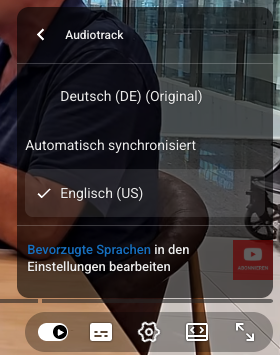
Watch in English
In the YouTube player, open Settings, choose Audio track, then English (US).
 No more ad blocks with a Supporter subscription!