The Emigrant's Handbook
Part 8: The First 90 Days in the Philippines
The first 90 days do not determine whether your entire life as an emigrant will succeed. But they very often determine whether you calmly find your feet or manoeuvre yourself into the wrong contracts, unsuitable residential areas, poor routines, and the wrong people right at the beginning.
One simple rule applies to this first phase:
Observe before committing. Rent before buying. Test before believing. Small amounts before large amounts. And do not immediately turn every burst of enthusiasm into a life decision.
8.1 Airport, Cash, and Taxi
At the airport, you do not want to look rich, frantic, or clueless. You are already tired enough after the journey. Therefore, keep it simple and clear: a small amount in local currency, your phone online, the address readily available, and either official transport or a reliable collection.
At the airport, you should exchange only a small amount into pesos because the rates there are often worse. Deal with the rest later and calmly through an ATM, bank, Wise, or other routes you have tested beforehand.
You do not need a large bundle of cash for the first day. You need only enough for a taxi, food, water, a SIM, and a small emergency.
For your first journey, use official taxis, Grab, or a reliable collection. With taxis, it is important to insist on the meter or on clearly agreed terms beforehand. Anyone arriving exhausted and without a local SIM is more vulnerable to inflated prices and poor decisions.
Manila in particular can quickly overwhelm newcomers: queues, traffic jams, heat, people, luggage, and tiredness all arrive at once. Cebu is often somewhat more relaxed, but the same rule applies there: first go to your accommodation, shower, sleep, and genuinely arrive.
Before landing, save the appropriate airport page: the Manila International Airport Authority for Manila or the Mactan-Cebu International Airport Authority for Cebu. Check terminal and traffic notices there before telling your collection only that you are “at the airport” and then waiting at the wrong exit.
Do not start implementing major plans on the very first evening.
Concrete next step: Before departure, decide how you will get from the airport to your first accommodation. Save the address, telephone number, a screenshot of the booking, and an offline map. Exchange only as much cash as you need for the first 24 hours.
Ideal time: On the day of arrival.
8.2 Location, Rental Agreement, and Ancillary Costs
Not every attractive home is genuinely good in everyday life. That applies worldwide, but in emigration destinations you often notice it more quickly. A condo may look clean and modern in photographs but still have poor internet, noisy neighbours, bad management, thin walls, water problems, or high ancillary costs in everyday life.
Therefore, examine not only the home itself but the entire surroundings: noise, neighbours, water pressure, internet, power cuts, flood risk, access, rubbish, safety, actual ancillary costs, house rules, visitor rules, parking, and responsibility for repairs.
If you work remotely, internet is not a comfort feature. It is the foundation of your work.
Before signing a long-term rental agreement, you should have seen the area during the day, in the evening, and if possible during rain. What looks idyllic in sunshine and a good mood can suddenly appear completely different during flooding, building work, karaoke, barking dogs, traffic, or poor access.
Condos, apartments, townhouses, and houses differ greatly in rules, costs, and everyday life. A condo can be convenient, but it often brings management, house rules, parking charges, and neighbours living very close together.
A house can provide more freedom, but it also means more responsibility: security, repairs, a generator, water, internet, pest control, and a garden can become part of your everyday life more quickly than you may expect.
I have experienced several forms of housing in Cebu: a condo, a townhouse, a different location, and later a return to a smaller subdivision. The sober lesson is that an objectively “better” building does not automatically create a better life.
A small neighbourhood where people know one another and social oversight works can feel safer and more human than a stylish anonymous condo. At the same time, a house or townhouse also means that repairs, tradespeople, water, electricity, and communication with the landlord are part of the package.
Buying is almost always too early at the beginning. Rent first. Learn about the region, the law, ownership rules, the neighbourhood, and real prices.
An emigrant who buys during the first 90 days often buys with hope rather than experience.
Concrete next step: View every serious housing option twice: once during the day and once in the evening or during rain. Test the internet with Speedtest, check the water, ask about ancillary costs, and obtain the house rules, deposit, and responsibility for repairs in writing.
Ideal time: During the first 2 to 8 weeks.
8.3 Local Bank Account and Payment Apps
A local bank account is very practical in everyday life, but it is not always easy to obtain immediately. Banks may require an ACR Card, a local address, a minimum period of residence, proof of income, references, or further documents. If one branch declines your application, that does not automatically mean it is impossible everywhere. But it does mean that you need patience, proper documents, and sometimes several attempts.
If you previously had a Philippine bank account, you should check its status with the bank in writing. Under the Philippine Unclaimed Balances Law, funds may be reported as an unclaimed balance after ten years without a further deposit or withdrawal. In practice, reactivation is then not something that can simply be dealt with quickly at the counter. It involves an application, identity verification, evidence from the bank, and depending on the status, the Bureau of the Treasury as well.
One of my viewers had exactly such a case: an old account, a bank relationship that was later closed or reported, no notification reaching the old address, and several clarification steps with the bank. Such matters can be resolved, but they cost time and nerves if you walk into them unprepared.
Practical Note for Returning Customers
Take old account numbers, previous passport or identity-document details, the old address, any existing account statements, passbook or cards, current identification, and a written enquiry to the bank.
First clarify whether the account is merely dormant, already closed, or recorded as an unclaimed-balance or Treasury case. I have not found reliable support in the official sources for a blanket rule that only part of the balance is returned. Fees, possible court matters, and the individual case must be examined separately.
For the initial period, you therefore need several payment routes: a German card, a second card, Wise or another tested transfer route, a cash reserve, a local ATM test, and later a local account.
Do not rely on a single card. If it is blocked, damaged, or does not work at the ATM, a small technical problem very quickly becomes a practical everyday problem.
Local payment apps can make bills, transfers, and everyday life considerably easier. In the Philippines, GCash, Maya, Coins, and banking apps are important examples. But not every foreigner can have every app properly verified immediately. Sometimes the process fails because of documents, the SIM, an ACR Card, the address, or the app-store country.
GCash is practically part of everyday life in many cities. Nevertheless, it is not a substitute for your main bank or an emergency reserve. Use such apps for smaller local payments, bills, or normal everyday life. Still keep your bank card, cash, Wise or bank transfers, and access to reserve funds separate.
Delivery services such as foodpanda are convenient too, but they must not become invisible in the budget. Anyone who already loses money every month to delivered food in Germany can make the same mistake abroad more cheaply, but more often.
Test only small amounts at the beginning. Do not immediately send a large amount of money into a new system that you do not yet genuinely understand. Check limits, fees, verification, support, withdrawals, and what happens if your phone is lost.
The same rule applies here: an app is convenient, an account is practical, but keep a cash reserve anyway. Digitalisation is wonderful until the battery is empty, the network fails, or the account is blocked.
Concrete next step: During the first 90 days, build a payment map: which card works where? Which ATM is reliable? Which app is verified? Which transfer route has been tested? And how can you obtain cash during an emergency?
Ideal time: During the first 30 to 90 days.
LINK PLACEHOLDER: Coins referral
Bureau of the Treasury — Escheat Proceedings
BTr Citizen’s Charter — Request for Reactivation of Unclaimed Balances Accounts
Treasury Circular No. 01-2010 — Reactivation of Unclaimed Balances
8.4 Internet and Working from Home
Anyone who works online, produces YouTube content, or remains in contact with family and clients needs reliable internet. In the Philippines, network quality depends heavily on the location. A home with a beautiful view but poor internet may be completely unsuitable for remote work.
Before signing a rental agreement, you should therefore check which providers are available and how stable the connection genuinely is. A single Speedtest during the viewing is not enough. Test at different times of day, ask neighbours, check mobile data inside the building, and establish whether fibre, cable, 5G, LTE, or only some unreliable Wi-Fi is available.
Free Wi-Fi is not work internet. It may work in shopping malls, hotels, or cafés, but it may not. Sometimes the Wi-Fi signal is present, but very little happens behind it. If you work remotely, upload YouTube videos, provide consulting, or regularly have video calls, you need your own reliable solution.
In rural areas, Starlink can be an important option. But here too, check first. A clear view of the sky, power supply, costs, installation, contract, support, location, and a replacement solution all belong in the decision. Starlink is not a magic word. It is a tool.
For serious online work, you need at least two routes: primary internet and a backup. That could be fibre plus mobile data, Starlink plus a local SIM, or another combination. Then there is electricity. During an outage, the router, laptop, and phone need an uninterruptible power supply, a power bank, or another reserve.
If, like me, you handle YouTube, consulting, emails, banking, and client conversations from home, you quickly realise that working from home abroad is not a laptop-on-the-beach cliché. It is infrastructure.
Internet, electricity, quiet, a backup SIM, a functioning workspace, heat, noise, and technical problems determine whether you can genuinely work or are merely occupied.
Concrete next step: Before entering a long-term rental, test three things: internet at the location, mobile data inside the building, and a backup for power cuts. If you earn money online, do not sign a rental agreement before these three points work.
Ideal time: Check before entering a long-term rental and set it up during the first few weeks at the latest.
Chapter 8 Checklist: Settle In for 90 Days Without the Wrong Commitment
Tick an item only after you can support it with a figure, date, document, or tested decision. The full one-page worksheet is in the appendix.
- Am I observing before committing and testing before believing?
- Are the airport transfer, cash, and first night organised without pressure?
- Have I genuinely tested the neighbourhood, noise, water, power, and internet?
- Are the lease, ancillary costs, and management clearly understood?
- Do account, card, transfer, and mobile-data routes work in practice?
- Will I make a conscious decision after 30, 60, and 90 days?
Practical check
Checklist at the end
Use the short checklist after reading all sections.
Go to checklist →Who is online?
- Visitors on the website
- Loading …
- Registered members
- Loading …
- Online now
Calendar
Dates at a glance
Calendar month is loading.
Dates are loading.
Dates today
Next 7 days

Auswandern auf Probe? Henning über Freiheit, Kosten und Leben in Asien (1)
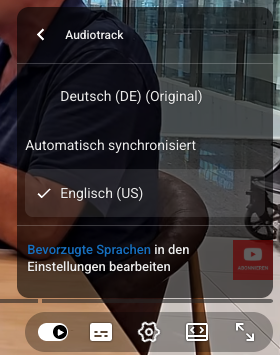
Watch in English
In the YouTube player, open Settings, choose Audio track, then English (US).
 No more ad blocks with a Supporter subscription!