The Emigrant's Handbook
Part 10: Work, Income and Business
The most attractive emigration plan is of little use if the income side consists only of hope. Many people talk about palm trees, visas, and homes. Far fewer talk honestly about what they actually intend to live on in month 7, month 18, or year 4.
If you already have a pension, rental income, investment income, or a stable online income, this chapter remains important. But if you still have to work, it becomes decisive. Emigrating is then not a long holiday, but a change of location with bills that continue to arrive.
A classic way in which many people trip themselves up is to reduce their calculation of living costs in the destination country without thinking consistently enough about the fact that their German income may disappear as well. This can work if you prepare it properly. But it can become brutal if you discover only in the destination country that local jobs, work permits, language, taxes, and finding clients do not work as you imagined.
10.1 Job Search in the Destination Country: Do Not Wait Until You Are There
If you need a job in the destination country, your job search must not begin only after your suitcases have been unpacked. You are then in the weakest position: a new country, new rules, perhaps a language barrier, continuing costs, and internal pressure. That is not a good basis for searching calmly or negotiating well.
At least one year beforehand, check whether you are legally permitted to work in the destination country at all, which visa or work-permit rules apply, which occupations are realistic, what salary level is customary, and whether your qualification will be recognised.
These questions are not important only for the Philippines. They arise in Paraguay just as they do in Thailand, Spain, or Portugal. Only the answers differ by country.
Especially in regulated professions, you must not assume that your German qualification will automatically be sufficient. Nursing, medicine, therapy, teaching, skilled trades, security services, transport, financial advice, or technical occupations may require local recognition, examinations, a language level, professional licences, memberships, or additional courses.
Sometimes you may initially be unable to work at all. Sometimes you may work only under supervision. And sometimes only for a considerably lower starting salary than you expect from Germany.
Therefore, also plan a bridging phase: translation of documents, recognition procedures, language development, local contacts, and income until you are genuinely permitted to work.
In the Philippines, finding a local job is often difficult for foreigners. Work authorisation, salary levels, and permitted activities must be examined realistically. Many local jobs do not pay what a European needs for their intended standard of living.
For German-speaking applicants, call centres, BPO, customer service, translation, remote work, or international companies may be more relevant than traditional local jobs. But you must test that before emigrating, not only once you are there.
Philippine Household Income Classes 2025
I have worked in German-language customer service in the Philippines myself, with German clients, sometimes at night, sometimes from home, and sometimes in the office. It was an important financial bridge, but also a clear lesson: local work is not an emigrant fairy tale.
You encounter different hierarchies, a different working culture, different salaries, different locations, and often demanding requirements concerning language and shifts. Many good German-language jobs are based in Manila while your life may be in Cebu, Davao, or on an island. That is precisely why you must research it beforehand.
Very important: tourist status is not a licence to work. If you want to earn money in the destination country, you must examine employment law, immigration status, work permits, tax and social security separately.
Simply because someone tells you, “everyone does it like this here”, does not make it compliant. And if it goes wrong, the person from the Facebook group will not be standing in front of the authority. You will.
The principle is therefore that a local job can be part of your plan, but it must not be your only form of life insurance. You need reserves and a Plan B in case the job market is slower, pays less, or is legally more complicated than expected.
Searching for work abroad is also not purely a matter of online forms. Anyone who only sits at home and waits makes it considerably harder. Highly qualified applicants in particular should deliberately visit trade fairs, exhibitions, conferences, company events, and the locations of potential employers before and during exploratory trips.
There, you often meet people who later make decisions or can at least refer you internally. A journey to the destination country should therefore be not only a holiday, but also a market test: which companies exist, whom can you speak to, and where can you introduce yourself personally?
Build a professional network early for this purpose. Set up your LinkedIn profile properly, identify relevant companies and contacts, comment meaningfully on their posts, and do not send connection requests like spam. Become visible over a period of months.
The same applies on X/Twitter or other professional networks: do not beg, but appear as a professional, ask questions, share content, and maintain relationships. If you intend to emigrate in two or three years, your job search does not begin with the application. It begins with relationship-building today.
Concrete next step: Twelve months before emigrating, create a destination-country job file containing work permit, occupations in demand, genuine job advertisements, salary level, language, application routes, recognition of qualifications, responsible recognition body, necessary translations, bridging phase, and Plan B. Also add a networking list containing potential employers, contacts, trade fairs, conferences, company visits, LinkedIn contacts, and regular professional points of contact.
Ideal time: 24 to 12 months before emigrating if you depend on earned income.
Sources and Guidance
Bureau of Immigration Pre-arranged Employment Visa 9G
DOLE / Bureau of Local Employment Department Order 248-25 on foreign employment
Philippine Information Agency on DOLE Order 248 and AEP practice
Philippine examples / classify before publication
Multilingual Philippines Official
Multilingual/Bilingual Jobs PH
Bilingual/Multilingual Jobs in PH
Bilingual Careers In The Philippines
Multilingual Careers Philippines
10.2 Remote Work and Self-Employment
Remote work can be a strong solution if your income comes from Germany, Europe, or international clients. The major advantage is obvious: you are less dependent on the local salary level in the destination country.
But the disadvantage is equally clear: tax status, false self-employment, a permanent establishment, payment processing, time zones, health insurance, and immigration law must be clarified properly.
If you are self-employed or want to become self-employed, your model must be viable before you emigrate. Bookkeeping, invoices, contracts, currency, bank accounts, backup internet, working hours, and finding clients do not belong on a “deal with it later on the ground” list.
Once you are there, you will already have enough to handle with housing, authorities, climate, everyday life, and settling in.
For a new business, I would not plan on six months, but rather 1 to 2 years. Not because every development process automatically takes forever, but because a business becomes genuinely helpful only once it runs stably, brings repeatable clients, and does not consume all of your energy.
Anyone who emigrates while simultaneously building a still-unstable business opens two construction sites at once.
This also applies to YouTube, coaching, consulting, affiliate marketing, an online shop, courses, writing, design, programming, or virtual assistance. From the outside, online income often looks easy: switch on the camera, talk a little, put a link underneath, and the money arrives.
That is not how it works.
You need a clear offer, reach, trust, repetition, proper accounting, and enough reserve for months in which less money comes in.
My own start on YouTube was a good antidote to such illusions. I began in 2020 with great enthusiasm and wanted to show travel destinations, culture, and life in the Philippines. Then COVID arrived: tourist destinations were closed, people wore masks, travel was difficult, and the income was practically not sustainable.
Later, I had to pause YouTube and go back to work. YouTube did not become full-time again until the end of 2023.
That is precisely the point: an online business can work. But it is almost never the quick rescue that people like to imagine at the beginning.
If you want to build an online business, do not start with the question: “How do I get rich quickly?” Start with the more boring but better questions:
Whose problem do I solve, and which problem?
Which genuine strength or experience do I have?
Who is my target audience?
Which small offer can I test?
What is my main product?
What is a secondary product?
And what can later become affiliate marketing, a course, consulting, a community, or more intensive support?
Content is not a lottery ticket. YouTube, podcasts, Instagram, newsletters, or blogs require repetition. Many people lose themselves in the perfect thumbnail, perfect script, or perfect setup and ultimately publish nothing at all.
It is better to start solidly, publish regularly, learn, and improve.
Skill comes through volume, not through three months of planning alone in a quiet room.
Affiliate marketing and recommendations can make sense if they genuinely fit you and your audience. If you use a product yourself, can explain why it helps, and openly say that you may earn from it, that is transparent.
If, by contrast, you insert links indiscriminately only because the commission is high, you destroy trust. It may produce money in the short term. In the long term, it burns your credibility.
If you make YouTube videos yourself, operate a website, build a newsletter, or publish a guide, an affiliate network such as ADCELL can be an entry point. There you can find partner programmes, tracking links, advertising materials, statistics, and settlement through a central account.
But it does not replace the most important work: you need your own content, a suitable target audience, and honest recommendations.
A link alone is not yet a business model.
Be especially careful with coaching programmes, trading offers, and promises that “I will show you the quick route”. Many people earn not from what they claim to teach, but from course fees, broker commissions, enrolment bonuses, or hope.
That does not mean every coaching programme is bad. It means only that you should check evidence, the business model, risks, refunds, genuine references, and whether the provider is paid after your success or has already won when you make the purchase.
If you already dislike finding clients in Germany, it will not automatically become easier merely because you are sitting in Cebu, Chiang Mai, or Asunción.
An attractive balcony is no substitute for a client pipeline.
Also examine the very practical side. Can you work across the time difference? Do you have two internet connections or at least a good backup SIM? Does your two-factor authentication work abroad? Can you issue invoices if your German account suddenly triggers a security review? What will you do if your laptop dies and the replacement part is unavailable in the destination country?
With Zeitverschiebung.org, you can calculate the overlap between your destination country, clients, team, and family in advance. The link belongs here because an income model is practical only when working hours, sleep, and availability remain compatible over the long term.
If you are self-employed, operate a company, or want to serve international clients, a virtual-office solution can also be one component. Clevver belongs in this category: a business address, digital mailbox, scanning and forwarding of business post, local telephone numbers, and depending on the country, further business services.
This can be useful for remote self-employed people, small companies, or international projects. But classify it properly: such an address is not a substitute for a private residence, tax examination, or genuine substance when authorities, banks, payment providers, or platforms demand more.
Concrete next step: Test your remote-work or self-employment model before emigrating with genuine clients, genuine invoices, genuine bookkeeping, and one month during which you realistically work as you later would from abroad. If you are still at the very beginning, use the 72-hour rule: write down the target audience, formulate the first offer, hold ten genuine conversations, or publish the first publicly visible piece of content.
Ideal time: 24 to 12 months before emigrating; for a completely new business, preferably 2 years beforehand.
10.3 Business in the Destination Country: Understand the Market Before Risking Capital
Starting a business in the destination country merely to rescue an insufficient budget is risky. That applies not only to the Philippines. It applies everywhere you do not yet genuinely understand the market, language, law, culture, customer behaviour, and local competition.
In the Philippines, subjects such as ownership rules, partner structure, permits, taxes, and local competition are added. In Paraguay or other countries, the details may have different names, but the basic question remains the same:
Do you control the business legally?
Do you understand the market?
Do you know your customers?
Can you absorb losses?
And do you have contracts that continue to hold when the mood changes?
Foreigners should never blindly put capital into a business they do not legally control or whose market they do not know. Business models based on family, a partner, friends, or the phrase “everyone does it this way here” are particularly risky without clear contracts and genuine figures.
I have seen often enough how a “small shop for the family” very quickly becomes a bottomless pit. First, it is only the rent. Then comes the renovation. Then the stock. Then the cousin who works there. Then the bookkeeping is missing. Then a permit is missing. Then it does not run as expected. And in the end, it was not a business but expensive hope with a sign above the door.
A local business can make sense. But then treat it like a genuine business: test the market, examine the figures, study the competition, understand the location, clarify the legal form, involve a tax adviser and lawyer, limit liability, and arrange ownership and control properly.
If you find this part boring, that is a warning signal. This boring part is precisely what protects your money.
Concrete next step: Clearly separate two things: building a business before emigrating as an income model, and establishing a business in the destination country as a local risk. The first can make sense early. The second should happen only after genuine knowledge of the market.
Ideal time: Test the business model 1 to 2 years beforehand; establish a local business only after a longer stay and genuine knowledge of the market.
Sources and Guidance
10.4 The Hard Financial Test: What Happens If Income Fails?
Before emigrating, carry out an unpleasant test. Not the attractive spreadsheet test in which everything works, but the miserable test.
What happens if the job arrives only after six months?
What happens if a client leaves?
What happens if YouTube income is halved?
What happens if your online business brings no new clients for three months?
What happens if you become ill and cannot work for two months?
These questions are not theoretical. COVID showed me how quickly a plan can collapse. If your project, clients, or content suddenly stop working as intended, you need reserves and the willingness to accept unromantic temporary solutions as well.
Take a job. Reduce costs. Live somewhere smaller. Postpone technology purchases. Reorganise projects.
That is emigrating in real life.
If your entire plan collapses after one bad quarter, it is not a plan. It is a bet. You may place bets, but please not with a terminated tenancy, health insurance, children, a partner, and retirement provision in the background.
Therefore, build three layers: current income, a reserve for normal fluctuations, and an emergency reserve for returning or changing location.
This reserve does not belong in cryptocurrency, a local family business, or “I will somehow manage”. It must be accessible, documented, and separate from everyday money.
Concrete next step: Calculate three scenarios: a normal month, a bad month, and a disaster month. If you have no answer for the disaster month, that is not a reason never to emigrate. It is a reason not to resign yet.
Ideal time: Before resigning, selling, deregistering, or entering a long-term commitment in the destination country.
Chapter 10 Checklist: Income and Failure Test
Tick an item only after you can support it with a figure, date, document, or tested decision. The full one-page worksheet is in the appendix.
- What will support me in month 7, month 18, and year four?
- May I perform the planned work legally, and is my qualification recognised?
- Have I tested salary, clients, tax, and payment routes in practice?
- Will my remote model survive power, internet, or client failure?
- Can a local business withstand market, partner, and control risks?
- Do I have a plan for a normal, bad, and catastrophic month?
Practical check
Checklist at the end
Use the short checklist after reading all sections.
Go to checklist →Who is online?
- Visitors on the website
- Loading …
- Registered members
- Loading …
- Online now
Das Siegel konnte gerade nicht geladen werden. ProvenExpert-Profil öffnen
Calendar
Dates at a glance
Calendar month is loading.
Dates are loading.
Dates today
Next 7 days

Auswandern auf Probe? Henning über Freiheit, Kosten und Leben in Asien (1)
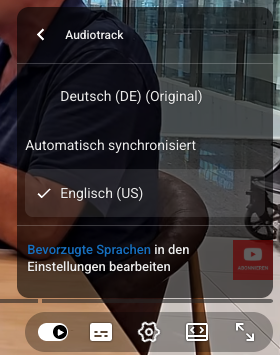
Watch in English
In the YouTube player, open Settings, choose Audio track, then English (US).
 No more ad blocks with a Supporter subscription!