The Emigrant's Handbook
Part 15: If It Fails - Return Plan
This Chapter Is Your Plan B Folder
This chapter is not intended to frighten you. It is your Plan B folder for the moment when you honestly realise: life abroad is no longer working.
Perhaps money has become tight. Perhaps the relationship has broken down. Perhaps illness, a need to care for a family member, homesickness, job loss, or a visa problem has been added to the mix. Perhaps, in the end, emigration was simply not the life you had imagined.
A Plan B is not a sign of distrust in your emigration. It is a sober safeguard to ensure that illness, separation, money problems, homesickness, visa trouble, or a family care situation do not leave you unable to act. Anyone who only starts thinking about returning when the account is empty has started far too late.
A good exit plan also does not have only one possible direction. Sometimes the right answer is not Germany straight away, but first a change of location: another city, another island, another region, or another country where the language, climate, costs, medical care, or social situation suit you better.
Returning to Germany is the hardest option, but it is not the only one. What matters most is that you remain able to act in good time.
The most dangerous sentence in this situation is:
“Then I will just go back to Germany.”
That sounds easy as long as you still have money, health, accommodation, bank access, and nerves. After several years abroad, reality often looks different. You may then lack a home, a registered address, a family doctor, a professional network, current payslips, a German telephone number, familiarity with the health-insurance system, furniture, a postal route, and sometimes even the feeling that you can still truly arrive in Germany.
If you take only one point from this chapter, make it this one:
Returning is not a single flight. Returning is a project involving money, a timeline, authorities, health insurance, taxes, housing, work, and your mental wellbeing. And you do not start this project only once the account is empty.
15.1 The Return Traffic Light: When You Must Act
Many people wait too long because returning feels like defeat. That is precisely the first mistake. You need clear triggers from which point you no longer merely hope, but start planning.
These triggers are not only financial. Money is measurable, but it is not everything. A relationship can deteriorate. Your health may no longer cooperate. The reality on the ground may remain permanently different from what you imagined. Food, climate, noise, neighbours, safety, language, or loneliness can affect basic needs.
If, after making an honest effort to adapt, you realise that life there is not sustainable, that is an exit signal – even if there is still money in the account.
At the same time, not every frustration is immediately a signal to return. Give yourself time. You come from a wealthy country. Cutting back and living on less does not happen at the touch of a button. During the first few months, you will often still be in tourist mode and will therefore automatically spend more.
For the first two years, therefore, allow for 30 to 50 per cent higher spending before the “cheaper life” truly begins.
So you do not have to abandon everything immediately after two bad weeks in the destination country. Emigration is more like an apprenticeship: at the beginning, you learn the basics; then you recognise patterns; later, you become calmer.
Set fixed review points, for example after 3, 6, and 12 months:
- What was merely initial stress?
- What keeps happening?
- What is getting better?
- What is getting worse?
Before leaving, also decide how much you can afford to lose through beginner’s mistakes. Almost everyone abroad eventually pays for the wrong home, poor decisions, too much trust, or underestimated bureaucracy. That is not automatically a disaster.
It only becomes dangerous when the cost of mistakes turns into a permanent leak and you keep paying out of pride even though the limit was reached long ago. This mistake budget must never eat into your escape account.
Green: Still Stable, but Something Is Slowly Deteriorating
Green means: you are still living a stable life, but something is slowly moving in the wrong direction. Your income is falling, insurance is becoming more expensive, your health is becoming more difficult, the relationship is becoming uncertain, or you notice that inwardly you are merely holding on.
At this stage, take a sober look at the following:
- How long will my money really last?
- Which German address could I use?
- Which health insurer would be responsible?
- Which city would be realistic?
- Which documents are missing?
This is not about panic yet. It is about waking up in good time.
Yellow: Return Planning Now Becomes Concrete
Yellow means: if nothing new happens, your reserve will last only about 6 months or less. Or your mistake budget has been used up and the same mistakes keep happening.
Return planning now becomes concrete. You no longer ask generally “what if”, but write to banks, insurers, your health insurer, potential hosts, former employers, tax advisers, and counselling services.
You check whether you can already look for a job from abroad, which documents the Jobcenter may need later, and whether your foreign income, accounts, or companies are properly documented for tax purposes.
Yellow is the point at which you no longer merely observe. You prepare real options.
Red: Returning Is No Longer a Thought, but a Decision
Red means: your reserve will last only about 3 months or less. Or you are starting to dip into your escape account for everyday expenses, your relationship, consumption, or projects based on hope.
Returning is then no longer a theoretical subject. You decide whether you are staying or leaving.
At this stage, you must not put any more money into projects based on hope. No new home abroad, no new business, no expensive devices, and no “it will all work out” contracts.
The plan must now be: secure your ability to fly, arrange accommodation in Germany, prepare health insurance, plan your route through the authorities, and ring-fence enough money for the first few weeks after arrival.
If the money is already almost gone, you are too late. A German diplomatic mission can help in an emergency, but that is not normal return financing and may have to be repaid.
You do not build a plan on that. The embassy route is intended for genuine emergencies, not poor timing.
Specific next step: Set up a return traffic light and enter the following every month:
current account balance, realistic monthly costs, secure income, mistake-budget spending, qualitative warning signs, unresolved risks, and the question:
“How many months can I keep going without a miracle?”
Ideal timing: Set it up before departure, then review it annually; review it monthly when your reserve is falling.
15.2 Timeline: Plan Your Return Backwards
A workable return plan does not begin at the airport. It begins much earlier – working backwards from your first day in Germany.
So do not only ask: “How can I somehow get back?” Ask more specifically: What must work on my first day in Germany so that I do not land straight in chaos?
First carry out a genuine exit cost check from your current location. Do not approach it on the basis that “a flight will somehow be possible.” Use concrete figures: local journeys, unresolved visa or overstay issues, necessary certificates, a domestic flight or ferry, an international flight with realistic baggage, a possible overnight stop, a SIM card or telephone, your first days in Germany, and a reserve for delays.
Philippines example: after a longer stay, immigration issues, an NBI Clearance, or other evidence may become relevant. You must check the current position rather than estimating it from memory.
During the early planning stage, the exit folder does not yet have to be perfect. But it must be documented. It should contain: a first point of contact and address, a budget for the return flight and transition, your health-insurance status, access to your bank, documents and 2FA, and one person who knows what to do in an emergency.
The longer you will have been away from Germany, the more important all of this becomes. Over the years, things that once seemed self-evident often disappear: a home, a family doctor, professional contacts, a registered address, and familiarity with the insurance system.
12 to 6 Months Before a Possible Return
At this stage, check your tax status, write to your health insurer, find your old statutory or private health-insurance documents, update your CV, consider a German telephone number or eSIM, test your bank access, digitise certificates and employment records, compare possible destinations in Germany, and establish honestly whether you could stay with family or friends for a transitional period.
This is not yet the moment for panic. It is the moment when you make your return realistic again.
6 to 3 Months Beforehand
Now begin your job search from abroad. You can use information, the job board and, depending on your case, advice from the Federal Employment Agency. The International and Specialized Services, or ZAV, may also be a possible point of contact for international return issues.
At the same time, clarify whether unemployment benefit I is realistic at all. Anyone who has been abroad for several years and has no current German insurance periods must not automatically assume that they will receive ALG I.
This is an important point because many return plans are inwardly built on money that may not be available later.
3 Months Beforehand
By now at the latest, you need a genuine landing address or at least a realistic accommodation plan.
Do not wait until you can say “I am back” before contacting the health insurer. Contact it beforehand with a clear enquiry:
“I expect to return on date X, I was last insured in this way, I have this evidence, and I need clarification.”
Also ask banks in good time whether a foreign address, a new German address, replacement cards, TAN procedures, and basic-account options will work.
Explicitly ask the landlord or provider of temporary accommodation for a landlord’s confirmation of residence if you are actually moving in there. Without such small details, a return quickly becomes a bureaucratic puzzle.
8 to 4 Weeks Beforehand
Now secure your flight, baggage, documents, account statements, insurance evidence, tax documents, rental or accommodation confirmation, and digital access.
Do not cancel foreign health insurance before the German continuation solution is clear. Do not deactivate any telephone number that is still used for your bank, email, authorities, or 2FA either.
At this stage, it is no longer about an attractive theory. It is about ensuring that nothing breaks at the end of the chain.
First Week in Germany
During the first week in Germany, the priority is stabilisation: move into your accommodation, register your residence, finalise health insurance, stabilise your bank, post and telephone access, contact the Employment Agency or Jobcenter, attend appointments, and submit documents.
If you need citizen’s benefit, do not wait until the fridge is empty. The application and responsibility must be clarified immediately.
Especially after years abroad, this first week takes energy. Do not overfill it, but do not put off the important things either.
First 90 Days
During the first 90 days, stabilise housing, income, health insurance, taxes, and your daily structure.
After years abroad, Germany often does not immediately feel like home again. Allow for this second culture shock. You are not simply “going back to the beginning”. You are returning to a country that has changed – and you have changed too.
Specific next step: Write a 12/6/3-month list and mark what you can deal with from abroad.
Give everything that can only be done in Germany a specific appointment during the first 14 days after arrival.
Ideal timing: As soon as returning becomes more realistic than a mere theory; no later than when you have 6 months of reserves left.
15.3 Financial Reserve: What You Will Live On During the First Few Months
Citizen’s benefit is not a buffer for life abroad. Nor does it replace your return reserve. That is an important distinction.
Citizen’s benefit requires, among other things, that your habitual residence is in Germany, that you are in need of assistance, and that you are generally able to work for at least three hours a day. Being over 55 does not automatically exclude you from citizen’s benefit. But being over 55, having been deregistered for a long time, having no current German job, no home, and no current payslips is a genuine risk situation.
That is precisely why you need more of a buffer, not less.
Importantly, there is no serious statement such as “Germany will pay after X months”. Entitlement depends on the individual case, and processing takes time. It takes longer if documents are missing, responsibility is unclear, accommodation cannot be evidenced, or assets and income abroad first have to be explained.
In acute cases, you can ask about an advance or rapid assistance. But that is emergency management, not planning.
Therefore, build up separate pots: an everyday account, a mistake budget, an escape account, and a return reserve.
The escape account is intended for leaving the country and ensuring your immediate ability to act. The return reserve is for the first few months afterwards. The mistake budget is the limit you deliberately set for beginner’s mistakes. Once this limit is reached, you stop hoping and make a new decision.
As a rule of thumb, EUR 3,000 is more of an escape sum than a genuine return reserve. From some countries, this might still allow you to leave in an orderly way: local journeys, outstanding fees, documents, a flight at short notice, and some room for baggage or an overnight stop.
It will not normally be enough for an orderly fresh start in Germany.
That is the difference between: “I can get out” and “I can arrive in a stable position again.”
In my view, guides that sell EUR 3,000 or 5,000 as a sufficient return reserve are budgeting too narrowly. More realistically, you should plan for a return reserve of at least EUR 12,000, or better still EUR 15,000 to 20,000. EUR 30,000 may look high at first, but it can give you precisely the peace of mind you need not to accept every poor decision during the first week.
Anyone who still has their own home, a secure pension, or a dependable family in Germany needs less of a buffer than someone without an address, a job, or current income.
This money should be kept liquid and robust: euros, Swiss francs, US dollars, or another stable currency that you can genuinely access. No meme coin, no option, no “it is bound to go up”, and no account that works only for as long as your phone, your SIM card, and a single app work.
It is not only the size of the reserve that matters, but also access to it. A single credit card is not a strategy. Nor is a single bank.
You need at least two independent routes: a dependable account, a working card, a tested transfer route, and a small cash reserve.
And please arrange all of that before you think you will sort it out “when you get there”.
The reserve should also be mentally separate. If you keep thinking that there is still money there for better furniture, a larger home, or kind favours, it is no longer a reserve. It is merely a slowly melting buffer.
I have seen often enough how people became generous in everyday life – and suddenly the safety net was gone. While everything is working, you hardly notice this mistake. But when things then fall apart, within two days a solvable problem can quickly become a catastrophe lasting three months.
As a rough practical rule, I would calculate as follows:
| Situation | Minimum Reserve | Better Plan |
|---|---|---|
| You have secure, free accommodation in Germany for 4 to 8 weeks and good documents. | 3 months of living costs plus the flight. | A 6-month buffer. |
| You have to pay for temporary accommodation, a deposit, furniture, and the transition through the authorities yourself. | 6 months of living costs plus the return flight, deposit, and start-up costs. | A 9- to 12-month buffer. |
| You are over 55, have been away from Germany for a long time, have no job offer, and have no fixed landing address. | It will be very tight with less than EUR 8,000 to 10,000. | EUR 15,000 to 25,000 is more realistic if you do not want to be forced straight into panic decisions. |
This is not a luxury calculation. A return is disproportionately expensive at the beginning: flight, baggage, initial accommodation, deposit, basic furniture, clothing for the German climate, a SIM card, travel tickets, documents, copies, medical appointments, perhaps glasses, medication, a replacement laptop or telephone, transitional health insurance, and a reserve for delays.
As of May 2026, the standard citizen’s-benefit allowance for a single person is EUR 563. The example calculation by the Federal Ministry of Labour and Social Affairs, or BMAS, gives EUR 982 including accommodation and heating. But that is intended as a subsistence minimum, not a return budget.
Accommodation costs are taken into account only within reasonable limits and after review. Anyone who simply signs a lease for an expensive home and only then asks whether the Jobcenter will pay is very likely creating the next problem.
If you take only one point from this section, make it this one:
Do not plan on the basis that “the state will catch me immediately”, but on the basis that “I can survive the first 3 to 6 months independently and in an orderly way”. If you are over 55 and have been deregistered for a long time, plan for 6 to 12 months instead.
Specific next step: Calculate your personal return reserve in five blocks:
return flight and baggage, accommodation for the first 90 days, living costs, deposit and initial furnishings, and a buffer for authorities, insurance, and health.
In addition, define separate figures for your escape account and mistake-budget limit.
Ideal timing: Set it before departure, recalculate it annually, and update it immediately during the yellow phase.
15.4 Accommodation, Registration, and Choosing Where to Live
The bottleneck when returning is often not the flight ticket, but the first genuine address. In Germany, you must register your residence within two weeks of moving in. For this, you need a landlord’s confirmation of residence. A tenancy agreement alone is not the same thing. And a fictitious address is not a solution.
Do not underestimate this chain: no accommodation, no proper registration. Without registration, dealing with your health insurer, bank, Jobcenter, telephone contract, school, doctor, and post often becomes considerably more difficult. Some things can somehow be started without a perfect registered address, but matters immediately become more complicated. For that reason, a genuine landing address is often more important than the cheapest flight.
Do not blindly rely on old statements such as: “If everything goes wrong, you can stay with me.” People acquire partners, children, smaller homes, family care situations, money problems, or simply a different life. Something that was sincerely meant three years ago does not necessarily still work today.
A promise to accommodate you upon your return is dependable only if it is current, concrete, and agreed in writing at least on the main points: period, address, registration, landlord’s confirmation of residence, contribution to costs, and what happens if it takes longer than planned.
If you stay with family or friends, establish openly beforehand whether you may register there if you are actually living there. This is not a small favour, but a genuine administrative step involving paperwork. If someone merely says “come here first” but cannot or will not provide a landlord’s confirmation of residence, this is not a dependable foundation for your return.
When choosing where to live, different criteria matter than for a normal move. At the beginning, you do not necessarily need the most beautiful city. You need the ability to act.
Large city: more jobs, better doctors, public transport, counselling services, and rooms available at short notice. But also expensive rents, a difficult housing search, and greater competition.
Rural area: sometimes lower rents and greater peace and quiet. But often dependence on a car, fewer jobs, fewer doctors, fewer counselling services, and fewer spontaneous transitional solutions.
Medium-sized town or an outlying location: often the best compromise if there is a good rail connection, affordable housing, doctors, a Jobcenter, counselling services, and perhaps an old network.
The most important question is not: “Where would Germany be most beautiful?”
The better question is: “Where can I become stable again within 90 days?”
A sofa belonging to a dependable person in an average town can be worth more than a perfect place without an address, a network, or affordable accommodation.
Specific next step: Choose three possible places of arrival and assess them by accommodation, registration, job market, doctors, public transport, Jobcenter, social network, and rent levels.
Ideal timing: 6 to 3 months before returning.
15.5 Health Insurance: Do Not Wait Until After Landing
Health insurance is one of the subjects about which returnees ask far too late. The simple statement “surely you are insured in Germany” is not enough. What matters is how you were last insured, whether you had statutory or private insurance, whether you have an entitlement-preservation arrangement, how old you are, whether you return as an employee, whether you need citizen’s benefit, and whether you can properly evidence your foreign insurance.
The age threshold above 55 is particularly important. Anyone who is older and has not had statutory insurance for a long time cannot simply assume that they will be able to return to the statutory health-insurance system without difficulty. There are rules, exceptions, and individual cases. That is precisely why your enquiry to your former health insurer or a specialist adviser belongs in the yellow phase – not in the first week after returning.
If you had private insurance, an entitlement-preservation arrangement is often considerably more important than many people believe before emigrating. It can secure your route back into your old tariff or at least without a new health assessment. If you had statutory insurance, an entitlement-preservation arrangement may be less important, depending on the case. But even then, you should ask in writing before leaving and before returning what applies specifically to you.
Do not cancel your foreign insurance too early. An insurance gap can become expensive, especially amid the stress of returning, the flight, temporary accommodation, and dealings with authorities.
Collect evidence: the period for which you were insured abroad, policies, proof of payment, deregistration from Germany, new registration, and an employment contract or benefit decision, if available.
Specific next step: Prepare a short health-insurance folder:
your last German insurance, the period abroad, current insurance, age, return date, planned status in Germany, and unresolved questions.
Send this folder to the health insurer or adviser before returning.
Ideal timing: 6 to 3 months before returning; if you are over 55, preferably 12 to 6 months beforehand.
15.6 Work, Employment Agency, and Citizen’s Benefit After 55
If you have genuinely been away from Germany for longer than 2 or 3 years, you must face a hard truth: unemployment benefit I will then often no longer be your lifeline because it requires current insurance periods.
The Federal Employment Agency gives a qualifying period as the basic rule: as a rule, you must have been in employment subject to social insurance contributions for at least 12 months within a qualifying period. After a long period abroad without compulsory German insurance, this requirement is frequently not met.
Nevertheless, you should begin your job search while still abroad. Update your CV, scan certificates, check LinkedIn and Xing, write to former contacts, use the Federal Employment Agency’s job board, investigate sectors, and send out applications. For returnees with an international background, the International and Specialized Services, or ZAV, can be a useful starting point.
The sooner you see how the market responds, the more realistic your plan becomes.
If you are over 55, you need to be especially sober. There is no point telling yourself that some job is bound to appear when you have not been part of the German labour market for years. It may work. It may not. That is precisely why you need two parallel plans: a job search and social protection.
Citizen’s benefit is intended for people who are in need of assistance, are capable of working, and have their habitual residence in Germany. In essence, capable of working means: under normal conditions, you can work for at least three hours a day.
If your health means that you are no longer capable of working, a different benefits route may be relevant, such as social assistance or reduced-earning-capacity benefits. This must be examined. Being over 55 alone does not automatically make you “unplaceable”, nor does it automatically make you incapable of working.
If citizen’s benefit is becoming realistic, clarify the following before returning:
- Which Jobcenter would be responsible for your destination?
- Which documents do you need right at the beginning?
- How do you evidence foreign accounts, income, assets, major expenditure, and rental costs?
- What applies if you initially stay with family or friends?
- What happens if you do not yet have a registered address, but do have an actual place of residence?
- Which rental costs are considered reasonable at your destination?
- Can you prepare an application online in advance?
- What must you do in person or digitally on the first working day after arrival?
Expect requests for account statements and follow-up questions. For a citizen’s-benefit application, the Federal Employment Agency generally asks for account statements covering the previous three months; depending on the case, a shorter or longer period may be required.
When returning from abroad, foreign accounts, large withdrawals, assets, cryptocurrency sales, support from third parties, or major expenditure can prompt additional questions. That does not automatically mean that you have no entitlement. It means: you need documents, explanations, and time.
The mistaken assumption is: “I will return and then clarify it.”
The better approach is: establish beforehand which door you will open on the first day.
Specific next step: Create a return-to-work folder containing your CV, evidence, the last 6 to 12 account statements, evidence of foreign insurance, tax documents, a rental or accommodation plan, an applicant profile, and a list of the responsible bodies at your destination.
Ideal timing: Begin your job search 6 to 3 months beforehand; clarify questions about citizen’s benefit and the Jobcenter no later than 3 months beforehand, or immediately if your reserve is very low.
15.7 Taxes: Returning Can Expose Old Mistakes
The tax trap often lies not in the return itself, but in the original departure. Anyone who still had a home in Germany at the time, retained a key, had German clients, a German company, a German banking structure, a German securities account, cryptocurrency sales, property, pensions, shareholdings, or unclear days of presence may suddenly have to explain upon returning what happened for tax purposes during the intervening years.
Germany links tax liability, among other things, to a residence and habitual abode. A home that you possess and can use may be relevant for tax purposes. A habitual abode may also play a role.
For business owners, shareholdings, exit taxation, extended limited tax liability, cryptocurrency, securities accounts, and foreign companies, the subject quickly becomes technical. This is not a matter for forum advice or rough gut decisions.
Before returning, you therefore need a tax exit check in the opposite direction:
- Was your deregistration at the time handled properly?
- Did you still have a home, key, room, company, or major clients in Germany?
- What income did you have abroad?
- Are there foreign tax assessments or at least dependable records?
- How many days did you spend in Germany each year?
- Are there securities accounts, cryptocurrency, shareholdings, property, or company interests?
- Will a foreign company continue to operate when you are living in Germany again?
- Which tax return will be due in the year of your return?
- Which documents must you retain before leaving the foreign country?
Very important: do not sell assets in a rush, dissolve a company hastily, move money back and forth without thinking, or sign a German tenancy agreement without first understanding at which point Germany becomes relevant again for tax purposes.
This applies especially when large sums, cryptocurrency, company interests, or several countries are involved.
Specific next step: Compile a separate tax file for every year abroad:
evidence of presence, tenancy agreements, visas, tax assessments, proof of income, account statements, flight dates, insurance evidence, and connections to Germany.
Ideal timing: 12 to 6 months before your planned return; if companies, securities accounts, cryptocurrency, or property are involved, be sure to do this before major transactions.
15.8 Who Can Help You from Abroad
You do not have to organise a return alone. But you do have to distinguish between the right bodies.
The German embassy or consulate is the right body for genuine emergencies abroad: loss of a passport, illness, imprisonment, death, acute destitution, or situations in which you must leave legally and cannot make progress locally.
However, it does not replace your return planning, does not simply pay private debts, and is not there to make poor preparation convenient.
This particular point from my video “How to Get Back to Germany!” is especially important: if you have ended up in an overstay situation or are staying illegally in a country, do not hide. The more dangerous route is simply to remain there illegally out of fear.
The better route is to go voluntarily to the responsible immigration authority and German diplomatic mission, explain the situation openly, and ask about the local procedure for an orderly departure.
Philippines example from the video, which must be checked against the current position: the normal route is to pay outstanding visa charges and penalties, regularise your stay, and then depart normally.
If someone can demonstrate that they are permanently destitute and no one can cover the outstanding fees, the German Embassy in Manila may, under certain conditions, help to make departure possible nevertheless.
The video discussed an NBI Clearance, appearing at the embassy in person, a certificate of destitution, and subsequently an application to the Bureau of Immigration for deferment or a “Visa Fee Waiver”.
Importantly, this does not mean that debts are automatically waived. It may merely mean that departure becomes possible despite outstanding fees. Subsequent payment, re-entry bans, or further conditions may remain.
You must allow time for this. In the example, the timeframe was more likely weeks than days.
The embassy is also relevant if your passport is lost: first obtain a local loss report or police report, then clarify a replacement travel document with the diplomatic mission.
This is not a button labelled “I am flying tomorrow” either, but paperwork under stress. That is precisely why a copy of your passport, visa history, local address, insurance evidence, and contact list belong in your emergency folder.
The rule for every country is: the German embassy or consulate does not know every detail of your personal problem. But it knows the official route locally or can tell you which local authority is responsible.
For the Philippines, three contacts therefore belong in your return file: the German Embassy Manila for consular emergencies and replacement documents, the Honorary Consulate in Cebu as a nearer contact for certain cases in the Visayas, and the Bureau of Immigration for immigration status, overstay, and an orderly departure. These links matter here because return assistance and the departure procedure are two different tasks, and you must coordinate both sides early.
Ask early, factually, and completely. The longer you wait, and the more fees, overstay, imprisonment, hospital bills, or unresolved documents are added, the narrower your room for manoeuvre becomes.
There are also official information bodies and recognised counselling routes for questions about returning and emigrating. The Federal Office of Administration refers to the Federal Information Centre for Emigrants and People Working Abroad. Raphaelswerk is an established counselling service for people who emigrate, live abroad, or return to Germany.
Such bodies are especially useful before you book the flight because they can help you put responsibilities and the order of steps in the right sequence.
Depending on the situation, further bodies come into play in Germany itself: the Employment Agency, Jobcenter, health insurer, social welfare office, municipal emergency housing service, Caritas, Diakonie, AWO, debt counselling, tenants’ association, consumer advice centre, and specialist tax or insurance advisers.
You do not have to contact all of them at the same time. But you should know which body solves which problem.
Specific next step: Create a contact list with three groups:
assistance abroad, return counselling, and your destination in Germany.
For every destination country, add: the German embassy or consulate, local immigration authority, emergency number, procedure for losing a passport, overstay or departure procedure, and which evidence is required for destitution or return assistance.
Ideal timing: During the yellow phase, no later than 3 months before returning.
15.9 The First Week in Germany
The first week does not decide everything, but it sets the tone. Keep it free for authorities, insurance, your account, telephone, post, and health. Do not plan a tightly packed round of visits or a romantic homecoming tour.
After a long time abroad, what you need most during this first week is stability, an overview, and functioning access. It is not about immediately being “completely normal” in Germany again. It is about establishing the most important foundations properly.
Day 1 to 2
Move into your accommodation, secure important documents, stabilise your German SIM card or telephone access, test your bank login, check your cash reserve, and activate your postal address.
You should avoid overloading the first two days in particular. You have arrived, but you are probably not yet truly organised. Nevertheless, the most important forms of access must work: telephone, bank, documents, address, and a means of contacting you.
Day 2 to 5
Begin registering your residence if you have actually moved in and have a landlord’s confirmation of residence. Contact the health insurer and submit any missing documents.
If necessary, make initial contact with the Employment Agency or Jobcenter, prepare the application, and organise the evidence.
This is the stage at which you should improvise as little as possible and document as much as possible. Every confirmation, every appointment, and every document submitted belongs in your return folder immediately.
Day 5 to 10
Find a doctor or family doctor, secure medication, follow up applications, examine the housing market, contact counselling services, and organise tax documents.
The transition from merely arriving towards stabilisation now slowly begins. You do not yet have to have solved everything, but you should know which unresolved points are urgent and which can be dealt with over the following weeks.
By Day 30
Prepare a realistic monthly budget for Germany. Extend your accommodation or look for a home. Obtain written confirmation of your insurance status, deal with follow-up questions from authorities, structure your job search, and take psychological pressure seriously.
A return can be more emotionally difficult than you expect beforehand. You are not simply coming back. You are coming back with experiences, losses, expectations, and perhaps disappointments as well. That is part of the process and should not be dismissed.
By Day 90
Review your stabilisation:
- Do I have an address?
- Do I have health insurance?
- Do I have income or a clear route to benefits?
- Does my postal route work?
- Does my bank access work?
- Do I have a doctor?
- Do I have a daily structure?
- Do I have a plan for the next 6 months?
If not, this is not personal failure. It is a signal: more counselling, a tighter budget, a simpler place to live, and smaller goals.
Specific next step: Print out a first-week list and pack it in your hand luggage together with your passport, insurance evidence, and bank details.
In a crisis, you do not rely on your memory and a good mood.
Ideal timing: Before the return flight.
Chapter 15 Checklist: Plan B Return File
Tick an item only after you can support it with a figure, date, document, or tested decision. The full one-page worksheet is in the appendix.
- Which warning signs trigger preparation, and should I adapt locally, change location, or return to Germany?
- Are the flight, start-up, and 90-day reserves genuinely sufficient?
- Are accommodation, registration, and health insurance clear before landing?
- Are work, benefits, tax records, and documents prepared?
- Do banking, German SIM, two-factor access, and postal address work?
- Are the first 7, 30, and 90 days assigned and planned?
Practical check
Checklist at the end
Use the short checklist after reading all sections.
Go to checklist →Who is online?
- Visitors on the website
- Loading …
- Registered members
- Loading …
- Online now
Calendar
Dates at a glance
Calendar month is loading.
Dates are loading.
Dates today
Next 7 days

Auswandern auf Probe? Henning über Freiheit, Kosten und Leben in Asien (1)
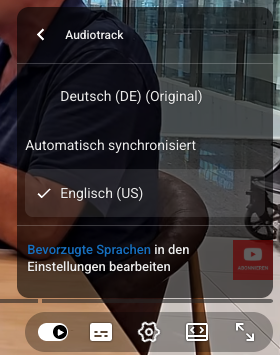
Watch in English
In the YouTube player, open Settings, choose Audio track, then English (US).
 No more ad blocks with a Supporter subscription!