The Emigrant's Handbook
Part 1: Decision and Reality Check
1.1 The Trial Stay: A Holiday Is Not Everyday Life
A common mistake begins quite harmlessly: you take a two-week holiday, feel free, receive a friendly welcome, enjoy the beautiful weather, and internally the decision to emigrate is almost made. This is exactly the point at which trouble often develops later. A holiday primarily shows you a country's best side. Emigrating shows you everyday life.
And everyday life does not mean only a photograph of palm trees and a sundowner. Everyday life also means heat, traffic, paperwork, sleep quality, neighbours, internet, hospitals, cash machines, and the question of whether you will still remain calm after four months when not everything works as you are used to in Germany.
If you are serious, you should visit a possible destination country not just once but several times. From my perspective, three serious stays are a sensible minimum. On the first visit, you are usually still full of impressions. Everything is new, exciting, and perhaps also a little overwhelming. The second time, you often notice more precisely what bothers you or what might become exhausting in everyday life. The third stay becomes particularly interesting because you no longer react only like a tourist. You begin to recognise patterns.
This is exactly the phase that separates gut feeling from reality.
I experienced it this way myself. I tested Thailand several times before emigrating. The country undoubtedly has many beautiful sides. In the end, however, the language barrier was a decisive point for me. I travelled more extensively through the Philippines between 2011 and 2013, including Cebu, Luzon, the provinces, and Boracay. There was no single magical moment when everything suddenly became clear. It was more the sum of many impressions.
I could manage almost everywhere with English. The people really were friendly and family-oriented. And for the first time, I could seriously imagine growing old in another country.
Especially in the Philippines, developing a genuine feel for the country is particularly important. Manila and Cebu City are roughly as far apart as Berlin and Munich. But there are not only kilometres between them. Everyday rhythms, languages, traffic logic, and pressures often differ considerably too.
In the Philippines, therefore, you are not merely testing one country. You are testing regions, infrastructure, and ultimately yourself as well.
A good trial stay is not an extended hotel weekend. If you truly want to find out whether a place suits you, you should avoid living only as a tourist wherever possible. Rent in a way that lets you experience at least some normal everyday life. Go shopping. Travel routes yourself. Speak to landlords. Check where the hospital and pharmacy are. Record real costs. And observe honestly how you react to noise, vermin, waiting times, and visible poverty.
If you look only at the beautiful part, you make things easier for yourself for the moment, but ultimately deceive yourself.
I would rather say it too clearly now than too late later: a trial stay is not intended to prove that a country is beautiful. You usually know that after a holiday. It is intended to show whether your body, budget, patience, and way of life genuinely suit this exact place.
If you take only one point from this section, make it this:
Test everyday life, not a holiday!
Concrete next step: Plan three visits with a different focus for every serious country candidate: first orientation, then an everyday-life test, then fine-tuning the region, housing, and costs.
Ideal time: The first serious preselection actually begins several years before departure. If possible, start comparing several countries and regions five to two years beforehand. The final in-depth review phase for your actual destination country then generally takes place 24 to 12 months before the final move.
For context, begin with the fast timeline; you will find the handbook's start page under The Emigrant's Handbook. For questions about staying in the Philippines, the SRRV page will also be useful later.


1.2 Personal Suitability and Expectation Management
Emigrating rarely fails solely because of visas or money. Very often, your own attitude determines whether the fresh start abroad will be sustainable. If you believe that you can simply board a plane and leave frustration, impatience, loneliness, illnesses, dislikes, or bad habits behind in Germany, things may become very difficult later.
Because there is one thing you always take with you: yourself.
This is not intended to ruin your dream. Quite the opposite. It is an important safety line. The more honestly you assess yourself, the better you can prepare.
You will not suddenly wake up in the new country as a completely new person. You are the same person, only in a different environment. Your preferences come with you. Your dislikes come with you. Your physical weaknesses come with you. Your ego comes too. If you cope poorly with uncertainty, criticism, loneliness, or bureaucracy in Germany, warmer weather will not make that disappear automatically.
Emigrating changes almost everything at once: social contacts, language, daily structure, healthcare, shopping, climate, bureaucracy, proximity to family, and your own sense of security. The country is different. The people are different. The rules are different. But you are still you. You have to be able to handle that without internally exploding at every point of friction.
Therefore, examine honestly how you deal with uncertainty, heat, noise, indirect communication, different hygiene standards, and cultural misunderstandings. One especially important question is whether you genuinely want to adapt—or whether, internally, you expect the new country to please function like your old home. This is exactly where many people fail faster than they do because of money.
In the Philippines, two more things are added: relationships often matter more than processes, and saving face is more important in everyday life than many Germans initially understand. Anyone who constantly lectures others, embarrasses people, or tries to apply pressure by becoming loud generally earns not respect, but problems.
You do not have to like everything. But if you want to live in a country, you must learn to understand how it functions socially.
And as soon as you leave Germany, language becomes one of the most important points of all. How will you communicate in the new country? Can you still learn a new, difficult language at an older age? Many people manage this only to a very limited extent. Which foreign language do you already speak, and how widely is it really used in your destination country?
That is exactly why I had already tried translation apps. The results, however, were often sobering. See the videos below about translation apps and ChatGPT as a translator.
My conclusion today: at present, I would no longer think only of traditional language-learning apps. Such apps can help, but AI can now do considerably more in everyday life. It can translate, explain, rephrase in simple language, prepare local sentences, make menus easier to understand, formulate messages, and defuse cultural misunderstandings.
A paid AI subscription such as ChatGPT Plus costs USD 20 per month according to the provider (as of 15 July 2026; local taxes and exchange rates may differ) and, when used properly, can offer more than three half-useful apps that you stop opening after two weeks.
For me, language was a genuine decision filter. In Thailand, I realised very quickly: if I cannot learn the language at least usefully for everyday life and English declines sharply outside tourist areas, it will not work for me in the long term. In the Philippines, by contrast, English was one of the reasons the country became realistic for me at all.
That does not mean local languages should be ignored. Quite the opposite. You will be surprised how much even a few fragments of the local language can achieve. Locals immediately perceive you differently—usually much more positively. They notice that you are making an effort, want to integrate, and do not simply want to remain the outsider.
At the same time, many people also understand that learning a language is not easy. Mistakes and a lack of language comprehension are often forgiven more readily when it is clear that you are at least trying.
But the decisive point remains: language is not a minor issue. It determines whether you merely reside in a country or can really live there.
I tend to recommend an app because you almost always have your phone with you anyway. It is more convenient than an additional device that has to be charged again and takes up space.
If you take only one point from this section, make it this:
Emigrating is not a change of location with better weather; it is a test of character under new conditions.
Concrete next step: Before making your decision, write down three honest lists:
- What genuinely weighs on you in Germany?
- Which of those things will you take abroad with you?
- What must you work on yourself before a new country can help at all?
Also test before the trip whether you can really manage AI translation in everyday life.
Ideal time: During the decision phase.
1.3 Moving Away or Moving Towards: Frustration with Germany Is Not Enough
Many people consider emigrating because they no longer feel comfortable in Germany. The reasons can vary greatly: bureaucracy, the tax burden, the political climate, uncertainty, bad weather, or the feeling that their own efforts are no longer properly valued.
I can understand this frustration well. Nevertheless, it is important to remember: frustration alone is not yet an emigration plan.
For me, too, it was not simply a spontaneous “I need more sunshine.” Over the years, I increasingly felt that responsibility in Germany was being pushed further and further away and that, in the end, nobody was truly responsible when something went wrong. This was joined by a very personal experience: the final stage of my father's life showed me clearly how I do not want to grow old myself.
That was not yet a finished plan. But it was an honest trigger. Only then did the actual work begin: examining countries, calculating money, understanding risks, and finding out which route was genuinely sustainable.
If your entire plan consists only of “get out of Germany,” the second half is missing. Important questions then remain unanswered: where exactly? Why there? How will you finance your life? How long is the stay intended to last? And under what conditions does this plan work at all?
Another country can give you greater freedom. But it does not automatically relieve you of responsibility. Some countries are easier in terms of tax, business, or everyday life. Others are more difficult regarding visas, health insurance, legal certainty, language, or family.
So you never simply exchange problems for sunshine. You exchange one system for another.
Therefore, examine two lists.
First: what genuinely bothers you about Germany? Is it the bureaucracy? The tax burden? The schools? Your sense of safety? The climate? A lack of prospects?
Second: which country actually solves that point better, and what price do you pay for it?
Dubai may feel very safe, but surveillance and rules are different. Mexico may feel freer, but safety varies by region. The Philippines can be warm and humane, but paperwork, infrastructure, and personal responsibility for medical care remain real issues.
Your attitude in the destination country is also extremely important. If you want to live somewhere, bring respect and, if possible, added value too. Learn the language as far as is useful for your everyday life. Follow the rules. Pay what you are required to pay. And do not complain constantly that the new country does not function like Germany.
Anyone who only takes, constantly compares, and lectures others will rarely truly arrive.
If you take only one point from this section, make it this:
Emigrating works better when you are not only running away from something, but moving towards a sustainable life.
Concrete next step: Write a moving-away/moving-towards list.
On the left, write your frustrations with Germany. On the right, for each point, write which destination country solves it better, which new disadvantages arise as a result, and how you yourself will add value there.
Ideal time: Right at the beginning, before you become emotionally fixed on one country.
1.4 The Return Plan: Plan B Is Not Failure
A Plan B does not mean that you distrust your emigration. Nor does it mean that you believe in failure before you have even started.
A Plan B is simply the sober decision not to wait until money, health, a relationship, visas, or everyday life are already collapsing before thinking about returning or changing location.
Especially at the beginning, many people would prefer to push this thought away. That is understandable. Anyone who wants to emigrate would rather think about the fresh start than a possible return. Nevertheless, this very point is part of serious preparation.
The details do not belong at this early point yet. You will find the complete return plan, including the return traffic-light system, escape account, return reserve, Bürgergeld, employment agency, health insurance over age 55, taxes, embassy assistance, and a 7/30/90-day plan in Part 15, “And What If It Does Fail? Returning to Germany.”
Concrete next step: Mark Part 15 as a mandatory chapter before your final departure and later create your exit folder there.
Ideal time: Before your final departure, not only during a crisis.
Details, sources, and my own video references are collected together in Part 15.10.
Chapter 1 Checklist: Reality Check and Moving-Away/Moving-Towards
Tick an item only after you can support it with a figure, date, document, or tested decision. The full one-page worksheet is in the appendix.
- Have I tested the destination several times in everyday life, not only on holiday?
- Do the climate, noise, traffic, language, and infrastructure genuinely suit me?
- Is my moving-towards goal stronger than my moving-away frustration?
- Can my health, budget, patience, and way of life sustain this place long term?
- Which warning signs would make me stop or postpone the move?
- Have I set a Plan B, a limit for costly lessons, and the next trial stay?
Practical check
Checklist at the end
Use the short checklist after reading all sections.
Go to checklist →Who is online?
- Visitors on the website
- Loading …
- Registered members
- Loading …
- Online now
Calendar
Dates at a glance
Calendar month is loading.
Dates are loading.
Dates today
Next 7 days

Auswandern auf Probe? Henning über Freiheit, Kosten und Leben in Asien (1)
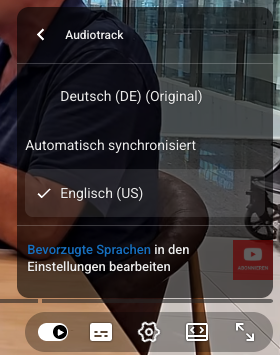
Watch in English
In the YouTube player, open Settings, choose Audio track, then English (US).
 No more ad blocks with a Supporter subscription!