The Emigrant's Handbook
Part 12: Family, Children, Pets and Special Cases
As soon as children, pets, care needs, disability, chronic illness, or complicated family circumstances are added, a normal emigration becomes a special project. Then “I’ll just give it a try” is no longer enough.
On your own, you can correct mistakes more easily. With a child, partner, dog, cat, wheelchair, person in need of care, or compulsory schooling, other people’s lives depend on your planning. You then need more lead time, more documents, more reserves, and above all more honesty.
12.1 Children, School, and the Ability to Return
Anyone emigrating with children must plan the type of school, language, recognition, ability to return, and social integration particularly carefully. International schools can be expensive. Local schools vary considerably—not only from country to country, but often even within the same city or region.
You should also clarify beforehand how children can re-enter the German system if they return later. Distance learning, online tutoring, and international qualifications can be relevant here.
Do not think only about “somehow continuing school”. Think about a coherent path to a qualification. Which school reports and certificates will be issued? Can they be used in Germany, in the EU, or at international universities? Is there an IGCSE, A-Levels, the International Baccalaureate, a German distance-learning school, a local qualification, or another recognised route?
If you want to keep open the possibility of the Abitur, vocational training, or university for your child later, you need this bridge before the move—not only when the child is 16.
Today, many parents are considering emigrating not only for themselves, but especially because of their children. The German school system does not suit every child, and more and more alternatives are emerging worldwide: international schools, bilingual schools, homeschooling, online school, project-based learning, smaller learning groups, or mixed models.
That can be a great opportunity. But it is not an excuse for educational chaos.
Children often learn languages faster than adults, particularly when they are younger and have genuine social contact. Even so, the transition is not automatically easy. Friends, routines, identity, homesickness, academic level, and recognition can be harder for children than for adults.
After six months, a child may have made astonishing progress with the language and still be emotionally homesick. Both can be true at the same time.
Self-directed learning or very open school models can work for some families. However, they require capable parents, a clear structure, and a legal review. “We’ll simply learn whenever the child feels like it” sounds romantic, but it can become risky if qualifications, a return, university, or vocational training matter later.
Freedom in education does not mean relinquishing responsibility. It means assuming it more consciously.
Therefore, examine three levels:
What is permitted in the destination country?
What is recognised in Germany or in the next country?
And what works well for the child in practice?
A child needs more than lessons. A child needs language, friends, everyday life, sport, safety, routines, and a way back if the plan does not work.
With a blended family, a new partner, or children from a previous relationship, the situation becomes even more sensitive. Who is allowed to decide? Who has custody? Who must consent to the departure? What role do you have in relation to your partner’s children? What happens if the relationship ends?
These are not romantic questions. But that is precisely why they must be put on the table beforehand.
In the Philippines, family ties can be very close. That can be wonderful when children are included and receive support. However, it can also lead to conflict when parenting styles, money, discipline, religion, choice of school, or place of residence differ.
Never interfere thoughtlessly in other people’s family structures. And do not automatically assume responsibility that has not been properly clarified in legal, emotional, or financial terms.
Concrete next step: Create a separate emigration file for each child: passport, birth certificate, custody, the other parent’s consent where relevant, vaccinations, school reports, language level, school options, costs, recognition, route to a qualification, social integration, return route, and emergency contact.
Ideal time: 18 to 12 months before departure; preferably earlier if a change of school or custody matters are involved.
Sources and Guidance
12.2 Pets
Pets make emigration considerably more complex. It is not only a matter of an airline ticket and a transport crate, but of three separate checks: the destination country’s import rules, the country of origin’s export and health certificate, and the airline’s conditions.
An account of taking a dog to the Philippines demonstrates precisely this point: the most difficult task is often not a single form, but the contradictory information. The airline, official veterinarian, export authority, and Philippine import office must all fit together.
What is handled through the USDA and Philippine Airlines for an emigrant from the United States means, correspondingly, for a German emigrant: the responsible veterinary office, veterinarian, airline, and Bureau of Animal Industry must be properly coordinated.
First check whether taking the animal is genuinely reasonable for it. Age, illness, heat, flight stress, breed, transport route, and the living situation in the destination country all count. A large dog in a German flat is one thing. The same dog in tropical heat, with a landlord’s rules, stray dogs, veterinary availability, and transport-crate logistics, is another.
According to official BAI information, dogs and cats entering the Philippines require an approved Sanitary and Phytosanitary Import Clearance, or SPSIC, in advance. The application requires, among other things, proof of vaccinations and parasite treatment, proof of a microchip, a photograph of the animal, and, where available or applicable, a pet passport.
Imports are not unrestricted either: the BAI specifies a maximum of three animals per single import, a permit validity of 60 days, an international veterinary health certificate issued within ten calendar days before export or departure, and an ISO-compatible microchip system.
For dogs and cats, the vaccination details are not merely a formality. For dogs, the BAI lists rabies as well as other vaccinations such as canine distemper, infectious hepatitis, parvovirus, parainfluenza, and leptospirosis. For cats, besides rabies, it lists panleukopenia, viral rhinotracheitis, and calicivirus, among others.
The initial rabies vaccination must not be too recent when applying for the SPSIC. According to the BAI, a minimum interval of 14 days must be observed after the initial vaccination. The parasite treatment, health certificate, microchip number, and vaccination documents must be consistent with one another.
The airline is a separate risk factor. Some airlines accept animals only on certain routes, only with advance notification, only in limited numbers, and only at suitable temperatures. IATA recommends contacting the airline early, reconfirming the booking or carriage of the animal before departure, and getting the animal accustomed to the transport crate weeks or months in advance.
Sedation is not a trick for the flight either. IATA advises against sedating animals solely to prevent panic or restlessness during transport. If sedation is medically necessary at all, it belongs expressly under veterinary responsibility.
If you are emigrating from Germany or the EU, consider not only entry into the Philippines, but also a possible return journey. The Philippines is not included in the current EU list of third countries for which no rabies antibody test is required when returning to the EU.
In practical terms, this means planning the ability to return early with the veterinarian and veterinary office. Anyone who wants to return to Germany later with a dog or cat should not wait until a crisis to clarify the microchip, valid rabies vaccination, EU pet passport, possible rabies antibody titration, and applicable time limits.
Also plan everyday life after arrival: Where is the nearest veterinarian? Is the usual food available? Which parasites, vaccinations, and diseases are locally relevant? Is the animal permitted to live in your accommodation? Who will look after it if you become ill or have to return?
And quite soberly: Can you permanently afford the rent, transport, veterinarian, medication, and emergency care for the animal?
Concrete next step: Create a pet file at least six months before departure and clarify every point in writing: microchip, vaccinations, parasite treatment, health certificate, SPSIC/import permit, export or official certificate, airline rules, transport crate, return to the EU, and emergency plan.
Ideal time: 6 to 9 months before departure; preferably earlier if planning a return to the EU.
Sources and Guidance
Bureau of Animal Industry Pet Import Philippines
European Commission — Bringing a pet into the EU from a non-EU country
European Commission — list of third countries without a rabies antibody test
12.3 Driving Licence, Vehicle, and Mobility
An international driving permit is only a translation. In the long term, it does not automatically replace a local driving licence. If you want to remain permanently in the destination country, you should clarify early when and how conversion or a local driving licence will become necessary.
Buying a car, insurance, workshops, mileage, spare parts, and driving style are also subjects in their own right in the Philippines. During the first few weeks, it is often wiser to use Grab, a taxi, or a driver instead of driving yourself immediately.
In an official FOI response, the LTO states a simple basic rule for the Philippines: you may drive for 90 days from arrival with a valid foreign driving licence. Anyone staying longer must examine the local solution through the LTO.
However, this basic rule does not replace a detailed review of your specific case. Important factors include the language of the driving licence, an International Driving Permit, visa, residence status, insurance, and vehicle class.
A motorcycle or scooter may look like freedom. Abroad, however, they are often also the fastest route to hospital. Different road logic, potholes, rain, dogs, unlit vehicles, tricycles, buses, inadequate protective clothing, and your own overconfidence are not minor issues.
If you want to drive, do so with a helmet, insurance, a locally valid driving licence, and a realistic assessment of your abilities.
In the Philippines, I deliberately do not drive a luxury car, but a simple Multicab. It is often entirely adequate for the city. Spare parts are inexpensive, and almost every mechanic knows these vehicles.
On longer journeys, however, you also notice the other side: basic suspension, little comfort, and a great deal of concentration. After a tiring drive to Bogo, I made it a habit to take a break every 90 to 120 minutes on longer journeys.
Mobility abroad does not mean only: “Can I get there?”
It also means: “Will I still be in a fit state when I arrive?”
When buying a vehicle, the same rule applies as with property: do not fall in love; inspect. Registration, OR/CR, insurance, previous owners, outstanding penalties, repair history, spare parts, the workshop, and resale are more important than shiny paintwork.
With used vehicles abroad, “looks good” is not a diagnosis.
Concrete next step: Before departure, check whether your driving licence is accepted in the destination country, whether you need a translation or an IDP, and when a local driving licence becomes necessary. After arrival, the rule is: observe first, then drive.
Ideal time: Obtain an international driving permit or IDP before departure; examine the local solution during the first few weeks after arrival.
Sources and Guidance
12.4 Care, Disability, Chronic Illness, and Other Special Cases
If you have special health-related or practical requirements, you must not merely find the destination country beautiful. It has to work. Not only on good days, but above all on bad ones.
A wheelchair, walking disability, dialysis, oxygen, insulin, special medication, autism, dementia, an official care level, mental illness, visual impairment, a hearing aid, sleep apnoea, a special diet, or regular specialist appointments do not make emigration impossible. But they make it more specific.
What matters then is not whether a country is generally inexpensive. What matters is whether precisely the care you need is accessible, affordable, and stable.
Do not examine only the capital. Examine the place where you genuinely want to live.
Are there specialists there? Is there a hospital? A laboratory? A pharmacy? Accessible routes? A lift? Backup power? A delivery service? Transport? A reliable carer?
And what happens during a typhoon, a power cut, a hospital admission, or if the person accompanying you is unavailable?
The climate, too, is a special factor that many people underestimate. In Germany, I experienced my body differently than I do in Cebu today. Heat, humidity, and tropical everyday life place different demands on circulation and energy.
If you are older, take medication, or have health-related issues, do not test only whether you like the country. Also test how your body reacts after four weeks of everyday life.
Here, too, the rule is: first think in general terms, then examine the specific country. Every destination country has different answers. The Philippines can be very practical in some areas and difficult in others.
A good doctor in Cebu is of little use to you if you live on a small island and no boat runs in bad weather.
Concrete next step: Write an honest special-case list: What do I need daily, monthly, and in an emergency? Which of these things is demonstrably available in the destination country? What does it cost privately? Who helps if I cannot act on my own?
Ideal time: Before making any final decision to emigrate, not only after arrival.
Sources and Guidance

12.5 Pregnancy, Birth, and a Young Family Abroad
Pregnancy and birth do not make emigration impossible. But they substantially change the risk calculation.
Suddenly, it is no longer only about you, but also about antenatal care, birth, postnatal care, a paediatrician, documents, nationality, insurance, emergency transport, and the question of who will help if something does not go according to plan.
Private healthcare abroad can be excellent. You may sometimes get appointments more quickly, have more time, receive care in modern facilities, and benefit from very personal attention. However, it can also be considerably more expensive than expected.
An appointment that costs 300 euros in one country may cost 1,000 euros in another. If your insurance covers only a specific pregnancy or birth budget, that budget can be exhausted faster than you think.
Therefore, do not ask only: “Am I insured?”
Check very specifically:
Are pregnancy, birth, complications, newborn care, a Caesarean section, premature birth, a midwife, a home birth, a paediatrician, vaccinations, and repatriation covered?
Are there waiting periods?
Does the cover apply if the pregnancy began before the policy started?
Does the child have to be registered separately?
From when?
Documents are also an integral part of this subject. Where is the birth registered? Which birth certificate do you need? Which embassy is responsible? Which deadlines apply to the child’s passport, nationality, residence permit, and health insurance?
This is not paperwork for later. Without proper documents, travelling with a baby quickly becomes difficult.
Concrete next step: Before departure, or at the latest when planning to have children, create a family health file: insurance correspondence, pregnancy and birth benefits, a list of clinics, emergency clinic, paediatrician, midwife, documentation process after the birth, embassy contact, and a budget for expenses you must pay yourself.
Ideal time: Before taking out health insurance and, at the latest, before pregnancy or a family move.
Sources and Guidance
Chapter 12 Checklist: Special-Case and Family File
Tick an item only after you can support it with a figure, date, document, or tested decision. The full one-page worksheet is in the appendix.
- Whose lives depend on my decision, and what do they need?
- Are passport, custody, school, qualification, and return route clear for each child?
- Are language, friends, everyday life, and emergency contacts prepared in practice?
- Are pet import, airline, vaccination, return to the EU, and emergency care fully confirmed?
- Are care needs, disability, illness, or pregnancy realistically supported?
- Are lead time, extra reserve, and Plan B sufficient for the hardest case?
Practical check
Checklist at the end
Use the short checklist after reading all sections.
Go to checklist →Who is online?
- Visitors on the website
- Loading …
- Registered members
- Loading …
- Online now
Calendar
Dates at a glance
Calendar month is loading.
Dates are loading.
Dates today
Next 7 days

Auswandern auf Probe? Henning über Freiheit, Kosten und Leben in Asien (1)
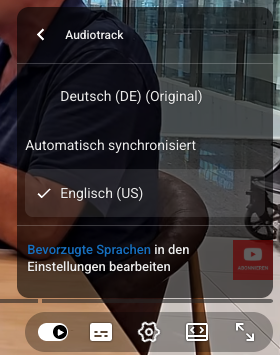
Watch in English
In the YouTube player, open Settings, choose Audio track, then English (US).
 No more ad blocks with a Supporter subscription!