The Emigrant's Handbook
Part 6: Moving, Luggage and Shipping
Moving abroad is not about taking as much as possible with you. It is about finding out what will genuinely make your new life easier.
In the end, many people take not only household belongings abroad, but old habits as well. And those are precisely what then cost money for containers, customs, storage space, frayed nerves, and sometimes frustration over repairs.
The decisive question is therefore not: “Can I somehow take this with me?”
The better question is: “Would I buy this again in the destination country if I did not already own it?”
If the honest answer is no, you usually already know enough.
6.1 Radically Reduce Household Belongings
Many things that appear valuable or practical in Germany suddenly become impractical, too heavy, unsuitable for the climate, or easier to buy new locally in the Philippines, Paraguay, Thailand, or other destination countries. Furniture, large electrical appliances, and heavy household goods are not worthwhile in most cases.
The basic rule is somewhat harsh but honest: taking something with you is usually worthwhile only for keepsakes, documents, a small number of high-quality specialist items, and things that are genuinely irreplaceable for you emotionally or practically.
Everything else costs transport, nerves, customs questions, storage space, protection from moisture, and often repair problems later as well.
Much more is available internationally today than in the past. You can buy locally, use local online shops, or check international retailers such as Amazon. But that does not automatically mean: “Then I will simply order everything blindly from abroad.”
The total price is always what matters: shipping, import duties, delivery time, returns, warranty, and repairs must all be included in the calculation. A cheap device is not really cheap if a defect turns it into a logistical problem.
For individual goods from US shops, a parcel forwarding service may be useful when retailers do not deliver directly to the destination country. Shipito provides you with a US address, accepts parcels, can consolidate shipments, and forwards them internationally.
But it is not a substitute for a residence, registered address, or official correspondence. It is purely goods logistics.
For the Philippines, Johnny Air is a practical tip in its own right: you order from US shops such as Amazon, eBay, or Walmart, use a Johnny Air USA address, and then receive the shipment in the Philippines for collection or delivery.
This is worthwhile only for items where the surcharge, waiting time, customs, warranty, and risk associated with returns still make sense.
Especially with large appliances, the local solution is almost always better. In a warranty case, you do not want to send a refrigerator, washing machine, air conditioner, or large solar system back across the Pacific. You want a retailer, a technician, spare parts, and a telephone number in the country.
If you take only one point from this section, make it this:
Do not take your German life with you in a container. Take your documents, your memories, and your genuinely important specialist items. You are better off building your new everyday life in the new country.
You should begin selling household belongings early. Anyone who waits until the final week gives things away under pressure or pays for unnecessary storage.
The better strategy is to sell, donate, dispose of, and take only the genuinely important personal items with you.
Concrete next step: Divide your belongings into four groups: documents and keepsakes, genuinely necessary specialist items, buy new locally, and get rid of it. Everything that lands in the “take with me” group must pass a tough justification test: why is transporting it better than buying it new?
Ideal time: Start 3 to 6 months before departure.
6.2 Balikbayan Boxes and Shipping
For many emigrants, Balikbayan boxes are an inexpensive way of sending personal belongings to the Philippines. Other countries have similar shipping or freight-forwarding solutions, only with different names and different rules.
But the basic idea remains the same: this kind of shipping can be practical. However, it is slow, limited, and not free from risk.
If you only want to send suitcases, bags, or a few boxes, a luggage-shipping service such as SendMyBag belongs to a different category from moving furniture or using a container. It may be interesting if you want to take more than makes sense as airline baggage but still do not want to ship half a household.
The destination country, customs rules, packing requirements, insurance, collection address, delivery address, and the question of who can accept the shipment safely at the destination remain decisive.
But here too, a box is not a licence to rescue old household leftovers and take them to the tropics.
Keepsakes, robust personal belongings, small spare parts, certain clothes, books, copies of documents, or objects with genuine emotional value make sense. Heavy, cheap, fragile, or locally readily available items do not.
Before packing, you should check what is permitted, what is insured, how long transport takes, and who will accept the box at the destination. Important original documents must never go into a shipping box; they belong in your hand luggage.
For the Germany–Philippines route, you can check the requirements with the Bureau of Customs and then compare specific terms from providers such as Bens Balikbayan, Happy Box, and LBC Express Germany / Per Brechelt. These links belong here because customs rules, collection area, transit time, liability, and permitted contents must work together. Their inclusion is not a blanket recommendation: check the current terms before every booking and compare at least two providers.
The same applies to medication, bank cards, expensive data-storage devices, and everything you could not replace if it were lost.
Ask yourself the same question with every shipment:
What happens if it is lost, gets wet, arrives late, or nobody in the destination country can do anything with it?
If the answer hurts, it does not belong in the box.
Concrete next step: First create a trial packing list before you actually pack. Cross off everything you could buy new or order online in the destination country within two weeks. Only things with a genuine reason remain.
Ideal time: 3 to 4 months before departure.
6.3 Electronics, Climate, and Power Supply
Many German devices will generally work abroad. Nevertheless, you should not underestimate how harsh a tropical climate can be on electronics. Moisture, heat, power fluctuations, and even insects can cause devices to age more quickly than you are accustomed to in Germany.
You should therefore prepare your laptop, smartphone, power bank, adapters, external hard drive, and important cables sensibly. In contrast, it is usually better to buy large appliances such as washing machines, refrigerators, televisions, air conditioners, generators, or solar equipment locally.
The most important point is not only the purchase price, but repairability. Wherever possible, buy what local people also buy and what is officially distributed in the country. You are then more likely to find retailers, repair shops, spare parts, technicians, and genuine experience.
An unusual German device may be technically excellent and still become impractical in the destination country if nobody can maintain it, no spare parts are available, or the warranty ultimately becomes worthless in practice.
For international online purchases, you must clarify before buying how warranty, returns, and RMA actually work. Does the warranty apply worldwide or only in the country of purchase? If the device is defective, must you send it back to the United States, Germany, or another country? Who pays for shipping, customs, diagnosis, and re-importation? Is there a local service partner?
That is already annoying with a mobile phone. With a refrigerator, it is absurd.
In the Philippines, the legal expectation surrounding warranties also differs from Germany. The Consumer Act distinguishes between an express warranty from the manufacturer or retailer and a statutory or implied warranty. According to the law, the implied warranty for new consumer products is not a blanket two years as people are accustomed to in Germany, but falls within a period of at least 60 days and no more than one year if no other express provision applies.
The rule is therefore: do not buy with German warranty expectations, but check the specific warranty conditions in the destination country.
Power supply is a subject of its own. Check voltage, frequency, plugs, surge protection, replacement batteries, an uninterruptible power supply, power banks, and a backup solution. For a laptop and mobile phone, this is usually dealt with quickly. For a solar installation, generator, air conditioner, or battery system, however, you need local planning, local electricians, local spare parts, and a realistic safety assessment.
A system that looks good in a YouTube video may still be incorrectly sized or poorly installed in your house.
After Typhoon Odette, I was without electricity in Cebu for about a month. If you work online, produce videos, need online banking, or have to remain contactable, electricity suddenly stops being a comfort issue. For me, that was one of the reasons I later installed a solar system with my landlord's consent.
That system now saves a significant amount in electricity costs and gives me more reserve. But something like that must also be planned locally, installed safely, and assessed economically.
For important data, the rule is: one device is not a backup. An external hard drive is better than nothing, but moisture, being dropped, theft, and power problems remain risks. Also secure important documents, photographs, project files, and access credentials in encrypted form and in a separate physical location.
If your laptop dies, your entire life must not die with it.
If you take only one point from this section, make it this:
Buy technology where you can also have it repaired.
Concrete next step: Before every major purchase, create a service checklist: official distribution in the country, local warranty, service centre, spare parts, return-shipping costs, voltage/plugs, climate suitability, power protection, backup, and experience reports from local users.
Ideal time: 1 to 2 months before departure.
Consumer Act of the Philippines, RA 7394 — warranty rules
DTI Consumer Education — repair, replacement, and refund
Chapter 6 Checklist: Take, Sell, or Buy Locally
Tick an item only after you can support it with a figure, date, document, or tested decision. The full one-page worksheet is in the appendix.
- Would I buy this item again in the destination country?
- Is taking it genuinely better than replacing, selling, or giving it away?
- Are originals, medicines, and irreplaceable items in hand luggage?
- Have I checked shipping rules, liability, transit time, and recipient?
- Do electronics, voltage, climate, warranty, and repair routes fit?
- Are my data encrypted and backed up in separate locations before departure?
Practical check
Checklist at the end
Use the short checklist after reading all sections.
Go to checklist →Who is online?
- Visitors on the website
- Loading …
- Registered members
- Loading …
- Online now
Calendar
Dates at a glance
Calendar month is loading.
Dates are loading.
Dates today
Next 7 days

Auswandern auf Probe? Henning über Freiheit, Kosten und Leben in Asien (1)
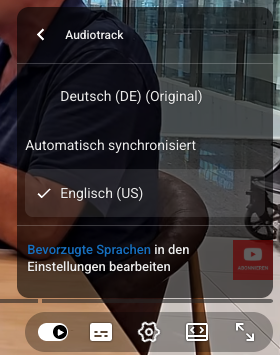
Watch in English
In the YouTube player, open Settings, choose Audio track, then English (US).
 No more ad blocks with a Supporter subscription!