
Special Resident Retiree’s Visa (SRRV) Classic Philippines
Finally, you can stay. For as long as you want.
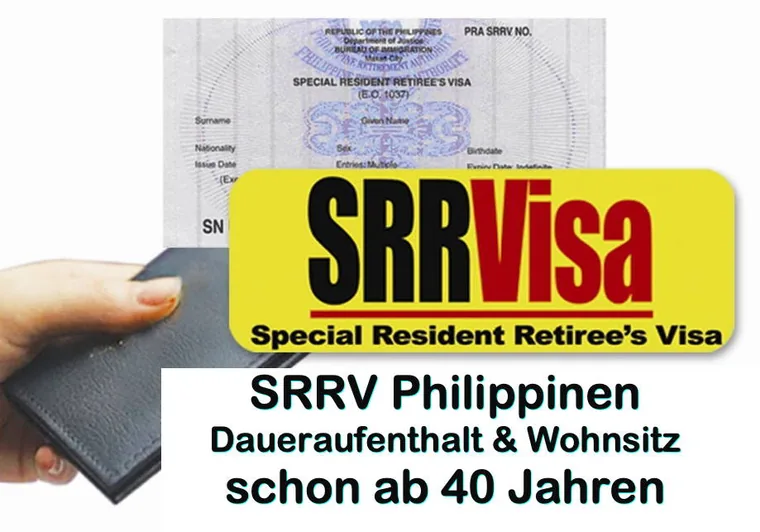
If you seriously want to live in the Philippines and are not just taking a long holiday, the SRRV Classic is hard to overlook for most emigrants. From age 40, with or without a pension, alone or with family. It is the visa that simply works.
You notice the real difference in everyday life: no appointment with the Bureau of Immigration (BI – the Philippine immigration authority) every two months, no tourist-stay ceiling hanging over you, and straightforward entry and departure at any time. If engaged under a separate local contract, Sir Romeo and Home901 can act as your independent agent - confirmed by more than a dozen of my clients who have already followed this route with him. He knows the procedures of the Philippine Retirement Authority (PRA – the retirement visa agency) and keeps every step in the right order.
SRRV Classic in 30 seconds
The online consultation helps you understand the eligibility rules, documents and sequence. It does not include on-site assistance, filing or representation before an authority. If you need local servicing, you engage an independent Philippine provider - such as Sir Romeo and Home901 - under a separate contract.
From that point, you are out of tourist mode: You live here, come and go as you please - and no longer have to deal with the usual bureaucracy between annual renewals.
1. The security deposit: your money - not gone, just parked
Many people misunderstand this: The security deposit is not a fee. It is a security deposit - your money is held safely in US dollars at a PRA-accredited Philippine bank. If you surrender the SRRV at some point, you receive the full amount back. It is that simple.
50+ with a pension
USD 15,000
Pension of at least USD 800 for a single applicant or USD 1,000 with dependents.
50+ without proof of a pension
USD 30,000
Without proof of a lifetime pension: higher deposit, same SRRV Classic status.
40 to 49 with a pension
USD 25,000
With a documented pension, entry is possible from age 40.
40 to 49 without proof of a pension
USD 50,000
Also possible from age 40: higher deposit, same SRRV Classic residence status.
2. The fees: once at the start and once each year
Unlike tourist status, the SRRV has no hidden items and no unpleasant surprises at the BI counter. There are two sets of costs: one when you apply, then one each year.
One-time costs when you apply
Recurring each year
Family included
SRRV Classic or tourist status - which suits you?
Tourist status is excellent when you have just arrived and want to see whether the Philippines will really become your new home. But as soon as you know, “yes, I am staying”, tourist status quickly becomes restrictive: a BI visit every two months and a required departure after the passport- and status-specific maximum stay - generally 36 months for non-visa-required nationals and 24 months for visa-required nationals. That is exactly where the SRRV Classic comes in.
SRRV Classic
USD 360 per year - for you plus up to two dependents.
Stay indefinitely. Multiple entry. An SRRV resident ID instead of the Temporary Visitor ACR issued under tourist status. No BI Annual Report. No ECC errands before every departure. No Travel Tax. Simply peace of mind.
9A tourist status
approximately USD 561 per year - based on a sample calculation at USD 1 = PHP 62.
A maximum of 36 months for non-visa-required nationals or 24 months for visa-required nationals, then you must leave. In between, you visit BI every two months, plus the ACR I-Card, plus the Certificate of Residence for Temporary Visitors (CRTV – visitor residence certificate) from month seven, plus an ECC for every departure after a longer stay. It works - but over time it becomes stressful.
What do you obtain abroad, and what must be handled locally later?
There are two clear sets: documents that you obtain from the country that issued each record, and local steps that you handle yourself or with a separately engaged Philippine provider. Those on-site services are not part of the online consultation.
What you obtain from the relevant issuing country
Local Philippine steps — separately engaged
Bottom line: SRRV Classic is your best bet
If you want to test life here for one or two years, use tourist status - that is completely fine. But if you really want to live here, the SRRV Classic is the solution that gives you the most peace of mind: no 36-month ceiling for non-visa-required nationals or 24-month ceiling for visa-required nationals, no visits to the authorities every two months and far less stress when entering and leaving.
USD 360 per year is manageable. And your deposit is not gone - it remains your capital and, under PRA rules, can even be moved into your own condominium. That is easy living in the Philippines, with transparent numbers.
Frequently asked questions about the SRRV Classic
From what age can I get the SRRV Classic?
How high is the security deposit for the SRRV Classic?
Is the deposit lost?
What does the SRRV Classic cost?
What proof of a pension do I need?
Who can be included as a dependent on the visa?
What does the SRRV take off my plate compared with tourist status?
Sources and checkpoint: The current information from the Philippine Retirement Authority on the SRRVisa, the PRA rules on Servicing Requests and Conversion of Visa Deposit into Active Investment, and the current BI fee schedule for a 9A stay are authoritative. Fees and administrative requirements can change; always check the latest requirements with the responsible office before applying or extending a BI stay. USD planning rate on this page: USD 1 = PHP 62; conversions are rounded from the Bangko Sentral ng Pilipinas reference rate published for 3 July 2026.
 No more ad blocks with a Supporter subscription!