The Emigrant's Handbook
Part 7: Arrival and First Accommodation
Arrival is not the right moment for major decisions. You are tired, overstimulated, sweaty, perhaps nervous, and do not yet have a genuine feel for everyday life on the ground. It is precisely during this phase that some people sign rental agreements too early, pay too much for a taxi, buy the wrong SIM card, or believe that they have to arrange everything immediately.
Do it differently: arrive first. Sleep. Get your bearings. Observe. The first few days are not there for you to set your new life in stone. They are there to help you avoid unnecessary mistakes.
7.1 Flight, Entry, and Proof of Onward Travel
Depending on the destination country and your entry status, proof of onward or return travel may be required. At first, that sounds like a small detail, but it is one of the classic check-in traps.
If the airline refuses to carry you because you lack proof of onward travel, you will not be arguing later with immigration in the destination country. You will not get onto the aircraft in the first place.
One important practical example for German travellers to the Philippines is that visa-free entry is possible for tourist or business stays of up to 30 days if the relevant conditions are met. According to the Philippine Embassy, these include, among other things, a passport with sufficient remaining validity and a return or onward ticket.
Nevertheless, always check this again through official sources shortly before departure. Entry and airline rules can change.
There is also the Philippine eTravel system. This is the official digital travel declaration for entry and departure.
Important: the official website is free. If some website wants to charge you for eTravel, you have very probably taken a wrong turn.
Before departure, create a small arrival folder. It should contain your passport, flight booking, proof of onward or return travel, first accommodation, proof of insurance, eTravel QR code, emergency contacts, accommodation address, and the name and telephone number of whoever is collecting you or your taxi strategy.
Everything should also be available as an offline copy on your phone.
If you travel through Manila, Cebu, Bangkok, Doha, Singapore, or another hub, plan connection times realistically. Cheap itineraries with very tight connections often look good at your desk. After 16 hours of travel, a delay, and immigration, they feel very different.
For an arrival or connection in the Philippines, also check the terminal, access routes, and current notices directly with the Manila International Airport Authority or the Mactan-Cebu International Airport Authority. This matters because even the correct flight can create unnecessary stress when you use the wrong terminal or collection point.
For the Philippines, AirAsia, Cebu Pacific, and Philippine Airlines belong on your checklist. Not because one of them is always the best choice, but because they are practically relevant for many domestic and Southeast Asian connections.
Do not compare only the basic ticket price. Also pay attention to baggage, rebooking, terminal, flight time, cancellation, payment method, and what happens if a feeder flight is delayed.
Concrete next step: Create an entry checklist for your destination country: passport validity, visa status, proof of onward travel, digital entry forms, first accommodation, proof of insurance, and emergency contacts. Check this list 14 days before departure and again 72 hours before departure.
Ideal time: 2 to 6 weeks before departure, with a final check a few days beforehand.
Philippine Embassy Germany — visa-free entry


7.2 First Accommodation: Stay Flexible
During the first few days or weeks, you do not make a final housing decision. Full stop. Your first accommodation is not there to determine your new life immediately. It should give you time to arrive, examine different areas, and avoid signing the wrong rental agreement out of tiredness, heat, or euphoria.
For your first accommodation, it is not only the price and attractive pictures that count. Location, safety, internet, air conditioning, water pressure, accessibility, cancellation terms, noise, building work, journey time, shopping options, proximity to a hospital, and the question of how you will get there at night are also important.
Especially in the Philippines, the difference between two districts can be greater than a German newcomer expects. In Cebu, a route may look completely harmless on the map and still become irritating in everyday life because traffic, bridges, rain, rush hours, or poor roads lie between you and your destination. In Manila, “only ten kilometres” can quickly become half a day's plan.
At the beginning, it is better to book flexibly than cheaply. A cancellable hotel or apartment for the first few days may appear somewhat more expensive, but it can save you from a much bigger mistake: being stuck for months in a location you have not yet understood at all.
Do not buy or rent long term before you have seen the area several times: in the morning, in the evening, during rain, at the weekend, and on an ordinary working day. Also check whether the building has parking, a generator, water supply, internet providers, house rules, visitor rules, and competent management.
A sober location filter helps when choosing where to live. City convenience, provincial calm, beach, island, highlands, dive destination, marina, or suburb are completely different ways of living.
A beach destination may be perfect for two weeks and feel cramped, expensive, or medically risky after eight months. A cool highland location can be excellent if heat affects you physically. Even so, weekend traffic, volcanic risk, or the distance to the nearest suitable clinic must be included in the decision. A provincial city can be cheaper and socially easier, but requires more planning for medication, spare parts, specialists, and routes for returning by air.
If you take only one point from this section, make it this:
Your first accommodation is a base, not a life decision.
Concrete next step: Book your first accommodation so that you can arrive calmly for at least a week without becoming tied down for months. Then create a location checklist covering traffic, internet, water, noise, safety, shopping, hospital access, and actual ancillary costs.
Ideal time: 2 to 6 weeks before departure.
7.3 SIM, eSIM, VPN, and Communication
A local SIM card is useful immediately after arrival. Without internet access, you are unnecessarily blind at the beginning: no map, no Grab, no message from your accommodation, no translator, no bank confirmation, and no contact with whoever is collecting you.
An eSIM before departure can help you to be online immediately when you step off the aircraft. It does not necessarily replace a local SIM card, but it bridges the first few hours. Globe, Smart, and DITO are important providers in the Philippines. Which solution is better depends heavily on the region, building, and type of use. There is no single best provider for every island, city, and street.
Important: SIM cards must be registered in the Philippines. According to official NTC information, foreign users are covered as well. Typically, passport data, an address in the country, and travel details or return or onward-travel information are relevant. Practical implementation may differ depending on the provider and current circumstances. Therefore, allow time for it.
Do not thoughtlessly leave your German number lying in a drawer somewhere. If your bank, email, access to authorities, or two-factor authentication depend on it, it must remain reachable or be replaced properly. At the same time, you should not mix your German and local numbers in such a way that suddenly everything is gone if you lose a single phone.
A VPN may be relevant for German content, banking, or streaming. But it is important not to understand a VPN as a security miracle. It is a tool, not a substitute for strong passwords, a password manager, and two-factor authentication.
Many local apps are not readily available in the German App Store or German Google Play Store. Banking, wallets, delivery services, government apps, transport apps, or local providers are often visible only in the respective country's store. Therefore, plan not only your SIM and eSIM, but also your app-store strategy.
With Apple, changing country can depend on subscriptions, credit balances, and the payment method. With Google Play, the country determines which content and apps you see. A change is possible only to a limited extent and may require local payment details. In practice, an additional local account may be more sensible than hastily rebuilding your main German account. You should test this properly on the ground and within the platform rules.
Concrete next step: Plan three communication routes: an eSIM for landing, a local SIM for everyday life, and your German number for two-factor authentication and banking. Then check which local apps require a local store, local number, or local payment method.
Ideal time: Check the eSIM before departure, buy a local SIM at the airport or in a shopping mall, and set up local app-store access during the first few days.
Change your Apple Account country or region
Change your Google Play country
AirVPN note
I have used AirVPN for more than 15 years and have never had any problems. Its no-server-logs and no-activity-logs policy also supports greater security.
Chapter 7 Checklist: Arrival Plan and Temporary Accommodation
Tick an item only after you can support it with a figure, date, document, or tested decision. The full one-page worksheet is in the appendix.
- Are my passport, entry status, and onward-travel evidence currently verified?
- Are forms, insurance, accommodation, and emergency contacts available offline?
- Are the terminal, connection, and transfer to the accommodation clear?
- Do my eSIM, local SIM, home-country number, and two-factor access work?
- Is the first accommodation flexible, and have locations been compared for transport, internet, water, noise, safety, shopping, hospital access, and service costs?
- Has everything been checked 14 days and again 72 hours before departure?
Practical check
Checklist at the end
Use the short checklist after reading all sections.
Go to checklist →Who is online?
- Visitors on the website
- Loading …
- Registered members
- Loading …
- Online now
Calendar
Dates at a glance
Calendar month is loading.
Dates are loading.
Dates today
Next 7 days

Auswandern auf Probe? Henning über Freiheit, Kosten und Leben in Asien (1)
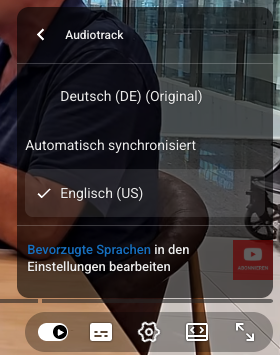
Watch in English
In the YouTube player, open Settings, choose Audio track, then English (US).
 No more ad blocks with a Supporter subscription!